



The rapid development of the Forex market has forced the governments of most countries to develop and put into practice the regulation of this sphere. However, the need to obtain a Forex license is dictated not only by the requirements of regulators of various jurisdictions, but also by the wide opportunities this permit document opens up. Having at your disposal a license to work in the Forex market, you give your business legality, which raises the status of the brokerage company in the eyes of potential clients. In addition, this is a way for entrepreneurs to significantly expand the geography of their business.
Features and Prospects of the Brokerage Business
Running a brokerage business is characterized by stable income, which is almost unaffected by the local economy and other aspects. Being a Forex broker is profitable in any state of affairs. For example, in case of a financial crisis due to such activities the investment banking sector of the country becomes more stable, which, in turn, increases the importance of the Forex market. In addition, brokerage companies are able to offer a wide range of financial transactions, ranging from traditional to complex products.
A Forex license opens up significant prospects for brokers due to the possibility to engage in trust management of capital, consulting, deposits and investment attraction. It is also noteworthy that brokerage activities are not characterized by such serious risks as, for example, the gambling industry.
Best jurisdictions for obtaining a Forex license
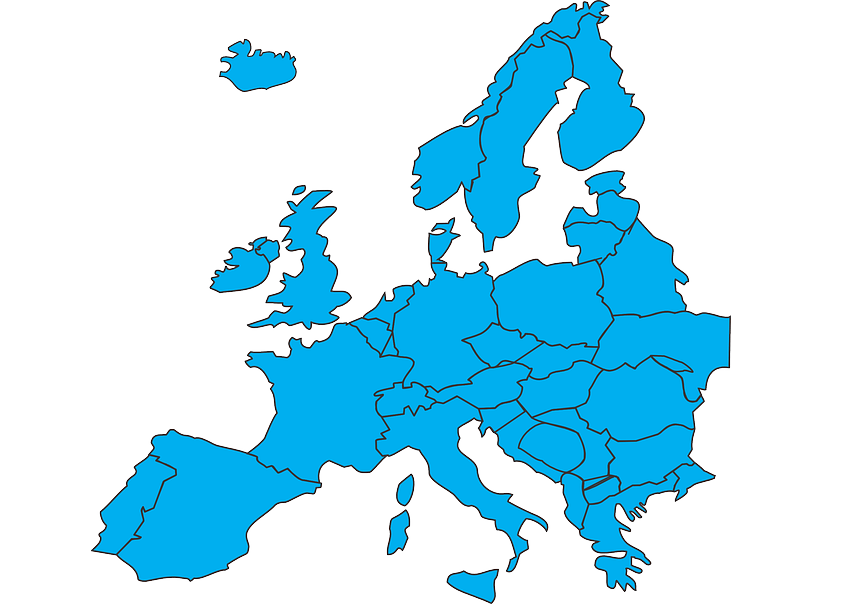
Legal Forex business can be carried out in dozens of countries, but not all of them are able to offer good conditions for foreign companies. It is believed that registering a Forex license is easier and faster in:
- Malta
- Cyprus
- In Estonia
- Singapore
- In the Seychelles
At the same time, the USA and Switzerland are considered the most prestigious – in these jurisdictions every registered brokerage company gains access to major financial players and a high status. However, the most stringent requirements for licensees are set here. The UK and Australia have less stringent licensing conditions, but the countries with cheap and fast registration procedures, including the Cayman Islands, Vanuatu, etc., are still the most popular.
General Requirements for Registering a Forex License in Almost All Jurisdictions
Virtually any country, whether it falls into the onshore, midshoring or offshore category, has common requirements for licensees:
- Confirmed registration and operations in the jurisdiction
- Financial Stability
- Availability of customer safety and security systems
- Impeccable business reputation, professional suitability of management personnel
- Compliance with KYC/AML/CFT policies
- Availability of a detailed business plan
- Availability of corporate, trading bank accounts
Benefits of Obtaining a Forex License
A Forex trading license is one of the key factors determining a company’s reputation. It grants the right to conduct transactions within the legal framework of a specific jurisdiction. It’s also important to understand that registrars cannot protect the interests of a Forex broker and its clients if the broker does not have a Forex license for its activities.
The main advantage of obtaining a Forex broker license is the guaranteed reliability from banks, other financial institutions, and potential clients.
Key Benefits:
- Increased trust from clients, partners, and banks.
- Complete transparency and honesty in trading operations.
- Ability to work with well-known software providers like MetaTrader, Binance Broker, etc.
- Competitive advantage compared to other brokerage firms.
- Access to effective trading tools and in-depth market analysis.
- Ability to openly advertise your services.
Additionally, thanks to international agreements and the recognition of Forex broker licenses in various jurisdictions, there is an opportunity to expand your business globally.
Types of Forex Brokerages Available for Sale
Forex brokers are companies that provide traders access to platforms for buying or selling currency.
Forex brokers are currently classified as follows:
- NDD (No-Dealing Desk);
- ММ (Market Maker);
- ECN (Еlectronic Сommunication Network);
- STP (Straight Through Processing);
- MTF (Multilateral Trading Facility).
Each type has its own method for handling transactions and executing orders.
Detailed overview of each type:
1. No-Dealing Desk (NDD)
As the name suggests, this type of broker does not have a dealing desk. However, it has a key advantage: it offers the best composite quotes. This provides NDD brokers with liquidity in the Forex market.
Under this model, the most favorable bid and ask prices are chosen from a pool of dealers. After adding a markup, such a price is offered to clients. This approach is known as “comprehensive” and is more liquid.
For clients, it is important who is the counterparty to the trade. On an NDD platform, this is unknown: the counterparty could be a bank, fund, or another broker. However, there is an advantage here: the counterparty also does not know you or see your stop-loss orders and other trade parameters, so manipulation is excluded.
A drawback is that trading on NDD can be slightly more expensive than with other types of Forex brokers. Nevertheless, traders value NDD for its high order execution speed.
2. Market Making (MM)
In the interbank market, MM brokers are known as dealers. Dealers usually charge a spread instead of a commission. Essentially, market makers provide a fixed spread and compete with each other by reducing it.
Most clients of market makers are novice traders. They are attracted by the transparency of trading costs and the high-quality liquidity of trading instruments, which is significant for beginners in Forex. The main income of a market maker is the difference between buying and selling prices.
Market makers attract their clients with various percentage bonuses. Such privileges are not offered by all types of Forex brokers.
Drawbacks of MM include:
- the use of re-quoting (a trader’s loss equals the broker’s profit).;
- setting limits on the distance of pending orders concerning the market rate.
3. Electronic Communication Network Brokers (ECN)
ECN brokers usually do not have their own dealing desk. Instead, they provide an electronic trading platform where professional market makers, traders, and other Forex market participants can submit buy and sell orders through their system.
Typically, ECN brokers charge commissions. Many ECN brokers send trades to a market maker’s dealing desk. This technology is known as “Straight Through Processing.”
An advantage of some ECN brokers is that a trader publishing a price can be provided with anonymity.
ECN brokers attract traders with low spreads and competitive transaction costs with rewards.
This type of Forex broker is aimed at fruitful cooperation with professionals and those who value high service quality and security. Professionals like to place offers themselves, and ECN provides this opportunity.
One of the main drawbacks of ECN is the large initial deposit with low leverage. Additionally, the price range can change unfavorably for the trader, influenced by the spread.
4. Straight Through Processing (STP)
STP brokers represent anonymous transaction intermediation for clients. STP directly handles traders’ orders in the market, which is somewhat similar to the NDD system. It forwards transactions to liquidity providers, selects the best option after review, and informs the client about the offer after adding a margin.
Traders appreciate STP for its good financial leverage. Such brokers earn their profit from transaction commissions.
Drawbacks of STP include the inability to influence the price reduction during transactions. Also, the amount of the initial deposit is quite significant.
5. Multilateral Trading Facility (MTF)
An MTF broker represents a multilateral trading platform. This type of Forex broker is known for its transparent trading conditions.
Clients of MTF have access to the order book, although it has limits. The MTF broker earns from trading commissions but does not participate directly in transactions.
There is also another type of broker on the Forex market, which is a hybrid of STP and ECN brokers with its own dealing desk acting as a market maker. However, this type is less common in Forex compared to the aforementioned types.
Cost of Obtaining a License
Obtaining a Forex license is accompanied by the mandatory deposit of a minimum authorized capital, the amount of which differs from country to country. As a rule, it is the most expensive to obtain a Forex license in:
- Switzerland – 10 million Swiss francs of authorized capital.
- In addition, the Company has a total of $30 million – $20 million to contribute to the authorized capital stock.
Somewhat cheaper this process is in:
- UK – 125 thousand euros.
- Australia – 22000-50000 dollars.
In most midshoring, offshore jurisdictions, the amount of authorized capital is generally even smaller.
Offshore Forex License
Companies with small capital prefer to obtain a license for Forex activities in offshore jurisdictions. For example, in Seychelles it is necessary to pay a registration fee of $200, and the annual license fee is only $1,000. When licensing in Mauritius, a small start-up capital of $20,000 is required. Also low costs to obtain a license in New Zealand, Vanuatu and other offshore jurisdictions. It is worth noting that in addition to the low cost, Forex license in offshore attracts the opportunity to quickly complete registration (3-5 months compared to 1-2 years in Switzerland or the USA).
Forex License. Choice of Jurisdiction
When choosing a jurisdiction, it is important for a prospective Forex broker to evaluate:
- A budget that can be allocated for enrollment
- Peculiarities of currency regulations and taxation
- Specific licensing conditions
- Timeline for obtaining a license
- Level of international reputation
You should also take into account the requirements for having an office. For example, in one jurisdiction it is obligatory to register a physical office, in another it is possible to work online. These and other nuances are extremely important to take into account at the stage of selecting a country.
Forex Market Regulations
The size and scale of the largest and most liquid market on our planet create unique challenges regarding its regulation. There is no centralized body that oversees Forex operations globally.
Regulation and oversight are performed by several governmental and independent bodies:
- local government where the Forex broker license was issued;
- representatives of independent financial commissions.
The organization that issued the Forex broker license in a specific jurisdiction can only protect local traders.
Standards set by regulatory authorities for Forex brokers:
- registration and licensing with the regulatory body;
- regular audits;
- informing clients about changes in services, etc.
These standards help ensure that trading in the Forex market is ethical and fair for all participants.
Regulator responsibilities concerning Forex brokers:
- monitoring company compliance with Forex trading license rules.;
- regulating Forex trading license rules;
- revoking Forex licenses in case of rule violations.
Regulators review client complaints about brokers’ activities and conduct periodic checks to identify potential violations and ensure compliance with Forex trading license requirements.
The main task of the regulatory body is to prevent brokers from failing to meet their obligations to traders. If such a situation occurs, the regulator acts as a legal advocate for investors and clients, providing them with legal protection.
The table below presents jurisdictions and regulatory bodies that oversee Forex brokers:
| Country | Regulatory Authority |
| Australia | Australian Securities and Investments Commission (ASIC) |
| Canada | Canadian Investment Regulatory Organization (CIRO) |
| Cayman Islands | Cayman Islands Monetary Authority (CIMA) |
| Hong Kong | Securities and Futures Commission (SFC) |
| Japan | Financial Services Agency (FSA) |
| Singapore | Monetary Authority of Singapore (MAS) |
| Great Britain | Financial Conduct Authority (FCA) |
| United States | National Futures Association (NFA), Commodity Futures Trading Commission (CFTC) |
In some jurisdictions, a Forex broker license is not required. Such brokers are registered as legal entities offering financial services and may operate globally via the Internet, but they lack legal protection and support from regulatory bodies.
Reporting Requirements and License Renewal
Legal Forex broker activities require regular financial reporting to the supervisory authority in the jurisdiction where the license is registered.
Forex companies must undergo regular quarterly checks to confirm compliance with licensing standards in their jurisdiction. These checks may include audits or other analysis methods. Regulators also have the authority to conduct unscheduled financial audits.
Forex brokers must keep client funds separate from the company’s own accounts. Failure to do so or other deviations from legal norms may result in significant fines, license revocation, or company closure.
Sanctions may also be imposed directly on the owners of Forex companies.
A Forex broker license can be revoked if:
- serious violations of Forex license rules are found;
- state fees are not paid;
- the Forex broker has not conducted its activities for more than 6 months.
There are jurisdictions with strong and weak regulations. Therefore, there are no universal requirements that apply worldwide.
Some regulators do not impose strict requirements for licensing or regular reporting, while others may require:
- payment of a state fee for license renewal;
- annual fees;
- additional reporting on income and taxes paid.
Reporting is crucial for the effective operation of the Forex market. It not only allows regulators to maintain oversight but also helps ensure transparency and protect traders’ interests. For brokers, such reporting demonstrates business openness and compliance with legal norms and Forex broker license requirements.
Our Service Offerings
To establish a brokerage company in compliance with the laws of a specific jurisdiction, professional expertise is required. If you plan to enter the international market, obtaining a Forex broker license will be your best solution.
A Forex broker license is an excellent way to stand out from competitors, improve your company’s image, and attract more affluent investors.
By contacting Lawrange, you will receive not only professional consultation on the Forex market but also a complete package of services for licensing brokerage activities in your chosen jurisdiction.
We guarantee confidentiality, a personalized approach, and transparent pricing!
Forex License
1. Obtaining a brokerage license
More than 6 trillion US dollars move through the planetary Forex (Foreign Exchange) currency market every day.
2. Forex Licensing in the Cayman Islands
If you want to conduct legal financial activities abroad, you may need a Forex license.
3. Saint Vincent and the Grenadines Forex Broker License
The list of jurisdictions friendly to Forex entrepreneurship is constantly decreasing. Popular offshore companies, Seychelles, Mauritius, Saint Lucia, under pressure from the international community, adopted legislative amendments.
4. Forex Broker License in Vanuatu
Forex is a progressive and steadily developing direction of financial business activity.
5. Forex license in New Zealand
New Zealand, which is under the jurisdiction of the United Kingdom, is one of the most prominent places for the effective development of financial business.
6. Obtaining a Forex license in the Comoros
A brokerage license in the Comoros provides access to the international Forex market and enables you to provide financial services to foreign investors.
7. Forex license in Australia
Australia is a popular investment destination, where a large number of reputable and reliable Forex brokers have emerged over the past years.
FAQ
How do you start a Forex brokerage firm?
The process of obtaining Forex licenses generally involves the following steps:
- Determining shareholders and directors.
- Providing a business plan.
- Collecting a document package.
- Registering paid-up capital.
Additionally, government fees need to be paid.
Which country is easiest for obtaining a Forex license?
Malta, Cyprus, Estonia, Singapore, and the Seychelles offer the most favorable and lenient conditions for obtaining a Forex license.
How long does it take to obtain a Forex license?
Obtaining a Forex trading license can take anywhere from a few months to several years. This depends on both the chosen jurisdiction and the quality of the submitted documents.