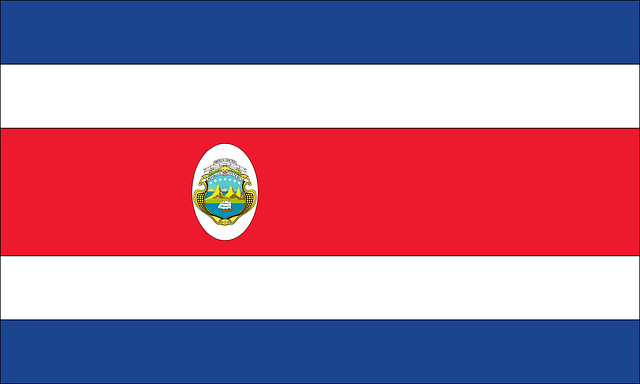
Costa Rica is among the offshore jurisdictions that are particularly popular with foreign investors. Its economic, political and social indicators are constantly growing, which means that the development of any business here is promising. This is further facilitated by a number of favourable conditions, including those related to taxation. In general, company registration in Costa Rica creates many opportunities, which can be realistically utilised if you take into account the specifics and requirements of local legislation, as well as some important nuances.
Why it is profitable for foreigners to do business in Costa Rica
The global economic crisis resulting from the pandemic has hardly affected the country. Economic, financial indicators here continue to grow. In the World Bank ranking on the ease of doing business, Costa Rica ranks 74th, but on the ease of obtaining credit, this jurisdiction takes an honourable 15th place. There are other advantages that have consistently attracted large amounts of foreign investment to the country. The local government does a great job every year to interest foreign entrepreneurs and stimulate financial injections into the country’s economy.
Impeccable reputation
In fact, Costa Rica is not an offshore in the direct sense of the word. This jurisdiction becomes offshore only if the registered company conducts direct operations in another country. Costa Rica is doing everything necessary to meet important international requirements for conducting safe business activities and combating money laundering. In the near future the state will become a member of the controlling organisation OECD.
The country has already introduced an open register of beneficiaries, which, on the one hand, is a disadvantage, as it will not be possible to ensure complete confidentiality of data. On the other hand, a company registered in Costa Rica will be able to conduct absolutely legal activities, which will significantly increase its chances of creating strong, serious partnerships with major players in the global market. Also, the excellent reputation of Costa Rica means that entrepreneurs will have no problems when opening an account in foreign banks.
Ease of doing business
The state does not create any obstacles for businesses of foreign origin. It is enough to observe simple and quite feasible conditions in order to completely exclude the possibility of interference by state services in the work of the enterprise. Ease of doing business is also facilitated by the possibility of opening an account with global banks. In this country there is no currency control and any restrictions on the withdrawal of funds. A citizen of any country can register a company in Costa Rica. In addition, the government practices active support of business, which in combination with other factors contributes to the formation of a favourable business-friendly environment.
Positive fiscal environment
The Costa Rican tax system is based on the principle of territoriality, i.e. taxes are paid on income that is earned only outside the country. For young companies, as well as those registered in special economic zones, various favourable customs conditions apply. There are also privileges for companies operating in certain areas, including the export and innovation sector. To optimise fiscal obligations, non-resident entrepreneurs can take advantage of tax planning.
Economic and political stability
Costa Rica has one of the most developed economies in Central America. It is based on a variety of sectors, especially agriculture, tourism, manufacturing and services (financial, transport, education, health, etc.).
A stable and growing economy in a state where there are no coups, wars and other cataclysms are important factors for effective business development. In Costa Rica guaranteed absolute inviolability of property for the past several hundred years. Here you will not face the risk of nationalization of business.
Costa Rica is known worldwide for its democratic institutions and high level of civil liberties. The country focuses all its resources on health care (one of the best in the world), education (accessible to everyone) and other ways to improve the welfare of the population, rather than on military spending. Costa Rica is one of the few nations without armed forces.
Requirements for conducting business activities in Costa Rica
Companies are required to appoint a legal representative (agent). The agent’s main task is to act as a liaison between government agencies and the management of the company, and to deal with administrative matters. Only a resident working under an official licence can be employed as an agent. Also, all companies must register an office – the place where corporate records are kept.
Regardless of the place of business activity, legal entities are obliged by law to submit an annual tax return. If the company’s activities are carried out exclusively outside the country, the declaration must include information that there were no local sources of income during the reporting period. The declaration must be filed between 1 and 30 September. In addition, offshore companies are required to register in the unified tax register RUT. The deadline for this procedure, according to local legislation, is determined by the last digit in the identification number.
Choice of legal forms of organisation in Costa Rica
The legislation of Costa Rica provides for a wide range of companies, which are managed on simple principles. Registration of a business in a particular organisational-legal form automatically puts before the entrepreneur certain requirements and determines the legal, tax framework for business activities. Available registration of a corporation in Costa Rica and other legal forms, each of which is characterised by a greater or lesser degree of prevalence, and has its own features.
Selection of a partnership that provides for limited liability
In Costa Rica, the name of such companies is called Limited Partnership (LP). They are a kind of analogue of domestic LLCs, and provide investors with maximum flexibility in managing the business, and are therefore the most common. By registering an LP, the owners distribute shares among themselves. Partners of this LPF come in general (without limited liability) and limited (responsible for risks within the limits of their own contribution). The Limited Partnership must be entered into the National Register database with accompanying documentation, including the Memorandum of Association.
What is characteristic of a non-public joint-stock company
Sociedad Anónima, or SA for short, is a more complex OFP than the previous one. It is chosen when planning to start a company in Costa Rica with ambitious plans. The capital of the company consists of shares held by the shareholders. Their liability is limited to the amount of assets invested. In addition, this Legal Form can issue shares, which helps to facilitate capital mobilisation. It is mandatory for an SA to have a board of directors whose responsibility is to appoint managers to carry out the daily tasks of the company. The amount of start-up capital depends on the specifics of the company’s business. This form of business is subject to more stringent accounting and legal compliance requirements.
Whether to choose a publicly traded company
Sociedad Anónima Abierta, or SAA for short, does not impose any limits on the number of shareholders or turnover of shares. However, there are limits on the minimum number of founders – 10 or more. The amount of authorised capital must not be less than 100,000 in dollar equivalent. This form of business allows to become a member of major financial leagues and attract investors from all over the world.
Features of a general partnership
In Spanish, Sociedad en Nombre Colectiv is a form that provides for at least two partners with rights and obligations governed by the terms of the memorandum of association. Liability for debts and other obligations rests with the partners, who cannot engage in other activities similar to those that constitute the purpose of the company (either alone or on behalf of others). Nor may they join other companies unless authorised by the other partners.
What you should know about limited liability partnerships
In Costa Rica, this Legal Form involves the division of companions into two types: with unlimited liability and with limited liability, depending on the contribution to the share capital. It is a partnership entered into between several people, one or some of whom contribute their money and the others their labour as part of the capital corresponding to each of the limited partners. The only ones responsible for the management of the company are the partners with unlimited liability (commanders or managers). Among them, a manager and his assistant are appointed. Partners with limited liability are not authorised to intervene in the management of the company, nor to include their name in the name of the firm, but they can:
- attend partner meetings on a consultative basis;
- Examine, review accounting and administrative acts;
- enter into contracts in its own name or outside of it.
Peculiarities of business registration in Costa Rica
Once the legal structure of the future company has been selected, there are a few standard steps that need to be followed in order to formalise the legal entity and launch the business. In general, this process is characterised by simplicity when compared to registration, for example, in the EU or the USA. At the same time it is important that by the time of registration of the company at least 25% of the authorised capital were deposited in the corporate account. The remaining part of the amount must be paid during the next month.
Company name in Costa Rica
Only choose a unique name for the legal entity, that is, one that is not yet registered in Costa Rica. It is possible to prepare several names in order of preference, in case one of them is occupied. In addition, the name must correspond to the chosen Legal Form: SRL, SA or SAA. Without prior authorisation from the Central Bank of Costa Rica, the name may not include words such as Bank, Finance, Building Society, Chamber of Commerce and some other words, as well as those that are similar in meaning. The verification of the proposed versions lasts 1-2 hours. The name must be registered with the Ministry of Economy.
Document packet
Business registration in Costa Rica implies the need to submit an Application with a set of pre-prepared documents submitted:
- The Memorandum of Association, Articles of Association, Share Issuance Resolution, Shareholder Register and Share Certificates (if the founder is a legal entity). These corporate documents must be translated into Spanish and notarised.
- Copies of passports of directors and founders of the company, one of the directors must have local citizenship. Documents confirming residence addresses (bank statements, utility bills) are also required.
- A document to confirm the address of registration of a legal entity.
- Document on payment of the state duty.
- Bank statement confirming the fact of payment of the authorised capital.
- A notarised power of attorney in case the registration is carried out by an attorney.
- A card containing specimen signatures of the directors, owners and seal.
In some cases, the Registrar may additionally require a letter of recommendation from the bank where the Applicant was previously serviced, or a certificate of absence of criminal record, etc. A favourable decision of the regulatory body allows assigning an individual tax number to the company with subsequent entry of data into the Registry. Verification of all documents and the Applicant’s compliance with the requirements takes from 2 weeks.
Registration with the Social Insurance Institute
You must register as an employer with the Caja Costarricense de Seguro Social (CCSS). You will receive a registration form (inscripción ante CCSS de persona jurídica), from which it is possible to carry out business activities. During the next 2 weeks after registration, the company will be checked to ensure that it complies with the information provided when registering in the national registry. After that, if the type of activity is foreseen, an application for a business license from the municipality is submitted.
Obtaining a license
After the registration of the business (firm) in Costa Rica is completed, it is necessary to submit an application to the licensing department of the municipality in the place of registration. It is considered within 2-4 weeks. Commercial licenses in Costa Rica must be renewed annually for a certain amount of money (depends on the type of activity).
Proceed to open a Costa Rican bank account
To run a business, you need to open a bank account at a local or foreign financial institution. Most local banks require you to provide:
Order a consultation
- Company Name.
- Identification number of the legal entity.
- Make a deposit of $20-$200.
- Passport details and identification number of the representative.
- Documents confirming the residential address of the owner of the firm or representative.
- For US customers, a completed “Know Your Customer” form.
- Certificate of no criminal record.
- A document confirming ownership of the company’s shares.
- Proof of a registered office in Costa Rica.
- Articles of Association of the company.
- A certificate confirming the legality of the financial sources used by the registered firm.
You may also need to provide additional documents as requested by the bank.
Peculiarities of taxation and reporting
The registration of a company in Costa Rica implies the need to organise business activities in accordance with the two main laws: “Taxes” and “Tax Adjustment”. The criterion that determines the applicable taxation depends not on the residency of the subject, but on the place where the income is received. In other words, any income earned outside of Costa Rica is exempt from taxation.
In addition to income tax, there are the following types of fiscal charges in the country:
- On capital gains (rate of 15 per cent).
- VAT (standard rate of 13%/, which is reduced to 1-4% for companies operating in education, health care, aviation services, production and sale of household goods).
- On royalty income (25%).
Regardless of the amount of profit earned, companies registered in Costa Rica should keep accounting records. Even if the income is received outside the country, this information should be indicated in a special column. Reporting is filed within 75 days from the end of the accounting period, which in Costa Rica lasts 12 months. Its beginning falls on 1 October, and the end – on 30 September. But it is possible to choose a reporting period that coincides with the calendar year.
Why choose Lawrange
Our Law Firm is represented by a team of experienced, highly qualified specialists in international law, finance, accounting and IT. We are constantly engaged in registration of businesses in various jurisdictions, and for each of them we are familiar with all the nuances and aspects of this issue. Lawrange will provide easy, fast, and, most importantly, legal registration of the company in Costa Rica. We provide a set of services necessary for the successful fulfilment of this task. This eliminates the risk of any errors or mistakes – from our side everything will be done exactly as required by the legislation of Costa Rica.
Conclusions
To open a company in Costa Rica, a promising jurisdiction in Latin America, you should have a thorough understanding of the local economy and legislation. Only in this case, registration will not present unpleasant surprises in the form of trouble with the law or unforeseen financial costs. Choosing this country with an impeccable reputation, favourable taxation and a favourable social environment is beneficial both for opening a business that will be carried out directly on its territory, and for offshore legal entities, which will have excellent prospects for successful development. To take full advantage of all the benefits of doing business in Costa Rica, enlist the support of experienced Lawrange specialists. Consultations, assistance in company registration, further business support – we provide a full range of services that may be required for the successful development of your own business in this jurisdiction.
FAQ
Is online company registration possible in Costa Rica?
Yes, by contacting our company, you can take advantage of the opportunity to remotely open a business in Costa Rica.
What is the cost of incorporating a firm in Costa Rica?
The price depends on what type of company you are going to open. The cost is also influenced by the type of activity of the company, the need to use nominee service, apostilled translations of documents, rent of a legal address, etc.
How long does it take to register a company?
In Costa Rica, it can take a minimum of 2 weeks to formalise a legal entity from the time of filing an application and a complete set of documents.
ORDER A REGISTRATION OF A COMPANY IN COSTA RICA
 Channel with ready-made companies for sale