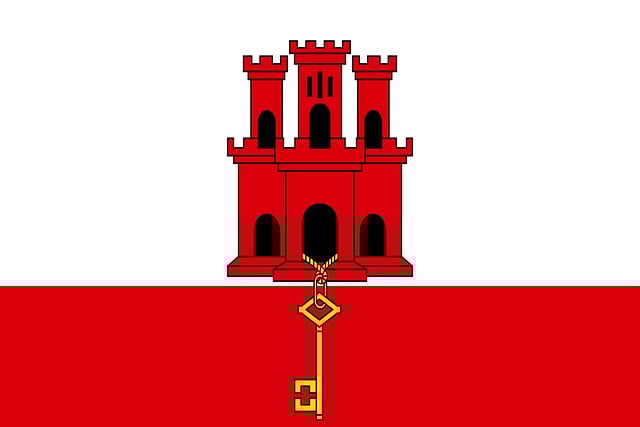

Gradually, investors and owners of international businesses have come to understand that when using offshore jurisdictions, one should consider their reputation. Gibraltar, alongside the islands of Mann, Jersey, and Guernsey, is an example of an offshore jurisdiction with a good reputation, facilitated by its predictable political environment, transparent legal system, reliable business infrastructure, advanced financial system, and stable economy.
Establishing a company in Gibraltar is a strategic move to ensure European presence and asset diversification. A non-resident firm in this jurisdiction can act as a holding company for international investments and trade, e-commerce, and real estate holding and can be used for many other purposes. With the support of Lawrange AA specialists, the incorporation process can be completed quickly and without complications.
General Overview of the Jurisdiction
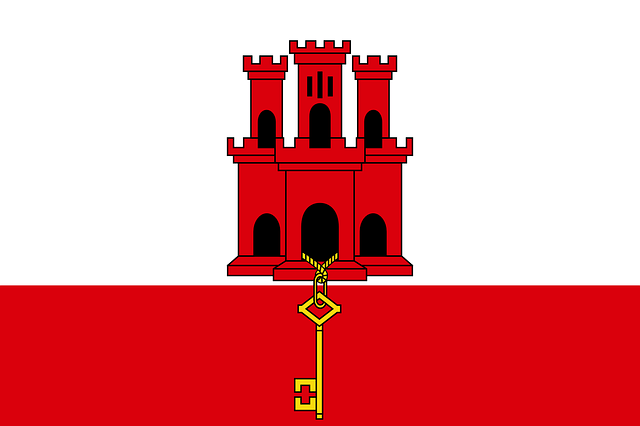
Gibraltar is a self-governing overseas territory of the British Crown. It is located at the southern tip of Spain (specifically, the Iberian Peninsula), 14.3 km from Morocco. This tiny land area covers only 6.8 square kilometers, and it has a population of just over 30,000 people. However, it is a wealthy country with unique strategic significance.
FYI! The official language in the jurisdiction is English. However, most Gibraltar residents are bilingual in English and Spanish. The currency is the Gibraltar pound (GIP), which is equal to the British pound (GBP). On January 31, 2020, Gibraltar and the United Kingdom left the European Union. However, negotiations regarding Gibraltar’s relations with the EU are ongoing.
Moreover, Gibraltar’s connection to the UK means that it is part of the European Free Trade Association (EFTA) or the single market. Therefore, this jurisdiction has a special status, and registering a company in Gibraltar provides a unique opportunity to access the EU markets while benefiting from regulatory autonomy. A separate tax system is in place here.
The economy of this self-governing territory is based on the service sector. A significant portion of the population is involved in servicing Ministry of Defence facilities. Currently, sectors such as financial services, online gaming, tourism, retail, and ship repair are actively developing. Gibraltar is among crypto-friendly jurisdictions.
Advantages of Registering a Company in Gibraltar
Among the main advantages of choosing Gibraltar as a jurisdiction for establishing/relocating/expanding your business are:
- Favorable tax regime: The corporate tax rate for resident companies is one of the lowest in Europe—12.5%—and non-resident companies do not pay corporate tax under certain conditions. There is also no VAT, capital gains, or wealth tax.
- Good reputation: Gibraltar is not on the FATF blacklist; moreover, on February 23, 2024, FATF removed Gibraltar (along with the UAE) from the gray list of offshore jurisdictions. This means that counterparties and financial institutions will not apply higher risk ratings when dealing with companies from Gibraltar.
- Access to promising markets: Gibraltar’s favorable geographic location provides access to Spain, Portugal, and the rest of Europe, as well as Africa, the Middle East, and its special status in relation to the EU.
- Simple registration and business startup: significant market entry speed is largely facilitated by easy access to key decision-makers in the jurisdiction, i.e., due to the absence of bureaucracy.
- Strong regulatory framework: the jurisdiction operates under the English legal system, known for its transparency and reliability, and has a well-developed regulatory sector.
Among other arguments in favor of opening a company in Gibraltar, one can also highlight the rapidly growing financial sector, government incentives for startups, opportunities to hire qualified local employees, developed telecommunications and IT infrastructure, and relatively low costs for setting up and maintaining a legal entity.
Organizational and Legal Forms of Companies in Gibraltar
The main forms of conducting business in the jurisdiction are enshrined in legal acts, particularly in the Companies Act 2014. Let’s take a closer look at the main ones:
Company Limited by Shares
Creating such a legal entity is simple and convenient. Shareholders are only liable for the company’s obligations up to the extent of their contributions to the business. These companies can be private or public. There are no formal requirements regarding the size of the share capital. This is a preferred form of doing business for foreign entrepreneurs who want to efficiently plan taxation and protect their capital.
Company Limited by Guarantee with or without a Share Capital
The founders (shareholders) of such a company undertake to fulfill the obligations/requirements of creditors up to a certain amount.
Unlimited Company with or without Share Capital
The founders (shareholders) of the legal entity bear unlimited liability for all existing obligations of the enterprise.
Protected Cell Company
Such a company owns assets of two groups: 1) common assets of the corporation and 2) portfolios (one or more). As a result, creditors’ rights will be limited to the assets of the separate portfolio. This organizational form is intended for asset segregation and protection. PCC can issue shares and pay dividends on individual portfolios.
General Partnership
The company is formed by partners who bear full responsibility for all obligations. Registering a business in Gibraltar in the form of a general partnership is suitable for startups, as well as friends or family members who want to build a company together.
Limited Partnership
This commercial association is created and managed by at least one general partner, who bears full responsibility for all obligations of the enterprise and manages commercial activities, and limited partners, who contribute their capital and bear financial liability within its limits.
Limited Liability Partnership
Unlike LP, the liability of all partners’ contributions to the capital is limited. The presence of a general partner is not required.
Branch
This option for business presence is suitable for testing the commercial opportunities that Gibraltar offers to investors.
Trust
A special form of trust ownership where the property belonging to the settlor (trustor) is placed under the control of the trustee, but the profits from it are received by the beneficiaries. In Gibraltar, trusts are not taxed if they have no local source income. However, for this to be the case, the beneficiaries must not be residents of Gibraltar. However, trustees can be residents of Gibraltar.
Additionally, one can conduct business as a sole trader, establish a fund or non-profit organization, and also redomicile (transfer) a company from another jurisdiction to Gibraltar.
Requirements for Registering a Company in Gibraltar
To establish a company, you must follow a series of legal procedures: register the name, prepare the memorandum, pay the registration fee, and obtain the registration certificate. When applying for registration, requirements regarding shareholders, directors, and secretaries must be considered, as well as ensuring the presence of a local office and so forth. Of course, future business owners may forget something or not know something. To ensure that the corporation registration in Gibraltar proceeds without errors and time loss, it is better to seek assistance from experienced consultants such as Lawrange specialists.
Order a consultation
Share Capital
When establishing a company in Gibraltar, there is virtually no requirement for a minimum share capital. The minimum share capital should consist of 1 share, the value of which is 1.00 pound sterling. However, the usual size of the share capital is typically at least 2,000 pounds sterling.
Company Name
Any sole trader, partnership, or company must register its name with Companies House Gibraltar. Initially, this registrar must approve the company name, which is then entered into the registry. After paying the corresponding fee, the entrepreneur receives a Certificate of Registration of the company name. After registration, the company name becomes unique, and no one else can use it.
Residency
There are no specific residency requirements for directors or shareholders of a Gibraltar company. Companies can be registered in Gibraltar by both residents and non-residents. This approach makes this jurisdiction an attractive place for international business.
Important! If management and control of the company’s activities are carried out from Gibraltar, such a company is recognized as a resident of Gibraltar. However, the company must be non-resident to avoid paying income (corporate) tax in Gibraltar. In other words, the shareholders and directors must be non-residents. The company must not conduct business on the territory and/or with residents of Gibraltar and must not have local bank accounts.
However, it is advantageous to establish a resident company for some types of activities, such as ICOs. Corporate tax will be 12.5%, and appropriate reporting must be filed.
Shareholders
The company must have at least one shareholder, who can be either a natural or legal person without restrictions on citizenship and residency. A person becomes a shareholder from the moment their name is entered into the company’s register of shareholders.
The maximum number of shareholders that a private company can have is not limited—previously, the law restricted the number of shareholders to 50. This restriction has been lifted, so private companies can consist of any number of shareholders without the need to register as a public company. However, the enterprise must provide information about new shareholders to the register of shareholders, which is publicly available.
Company Structure
Every legal entity must have at least one director and at least one secretary. They can be either natural or legal persons. A director cannot be simultaneously a secretary. Information about the director and secretary is publicly available.
Registered Office
Every company must have a registered local office, which is the official address where business correspondence is received. This address does not necessarily have to be the operational office of the company, but to comply with legislative requirements, it must be located within the territory of Gibraltar. Information about the company’s registered office is publicly available.
Procedure for Registering a Company in Gibraltar
The main steps for incorporating a business in Gibraltar are as follows:
- Defining priorities and drafting a business plan.
- Choosing, reserving, and registering the company name.
- Addressing the issue of a registered local office.
- Gathering information and documents on the founders and beneficiaries.
- Drafting the constitutional documents (Memorandum and Articles of Association).
- Completing registration forms and submitting documents for registration.
- Payment of registration fees.
- Entering information about the established enterprise into the Commercial Register.
- Obtaining confirmation of registration.
- Registering for tax and social security purposes.
- Opening a bank account.
- Obtaining licenses and permits for conducting specific activities, if required.
Attention! The last three points apply only to resident firms. If a legal entity is identified as non-resident, it does not fall under Gibraltar’s tax system by definition and is not required to register for Gibraltar tax purposes.
Note! To create a new non-resident company in Gibraltar, one should register with the Business Liaison unit at the Ministry for Business.
Submission of Application
Currently, filling out all necessary registration forms is done online on the government website. The application should be accompanied by a) copies of shareholders’, directors’, and beneficiaries’ passports and b) proof of residential addresses. In some cases, you may add resumes of directors, founders, and beneficiaries, as well as a detailed business plan, to the supporting documents.
Company Approval
The Certificate of Incorporation confirms the fact that the company’s registration in Gibraltar has been successful. All company data after registration is stored in the state register, which is administered by the Companies House. Upon payment request after creating an account on the Companies House website, third parties can obtain specific information about the company, which should be noted.
Licensing
In accordance with the Fair Trading Act 2015, any person wishing to trade (wholesale or retail), import goods in commercial quantities, and/or provide services in Gibraltar must obtain a business license.
A trading or business license applies to most types of activities. However, separate permission is required for certain business sectors. For example, investment business requires a license under the Financial Services Act or for taxi drivers under the Transport Act.
Bank Account
To maintain its non-resident status, a non-resident Gibraltar company should not have any bank accounts in a bank located in Gibraltar. This means that the non-resident company manages its bank accounts in another country or countries. Often, this is simply another offshore jurisdiction, such as the Isle of Man. It may also be advisable to open an offshore bank account in a country closer to the company’s actual business operations or to the actual location of its beneficial owners.
We do not recommend opening a local account for those interested in registering a company in Gibraltar that will be considered non-resident. It is essential to understand that if such an account is opened, transactions through it will be subject to the regular tax rate of 12.5%.
Compliance Requirements
We emphasize that for a company registered in Gibraltar to be considered non-resident, it must meet the following criteria:
- Be owned by persons who are not residents of Gibraltar.
- Be controlled (managed) by persons who are not residents of Gibraltar.
- Not trade or conduct business in Gibraltar and with residents of Gibraltar.
- Not transfer its income to Gibraltar.
- Not hold shareholder/participant meetings in the jurisdiction.
- Have a registered office and a permanent secretary in Gibraltar.
Documents Required for Registration
To open a company in Gibraltar, documents verifying identity, as well as proof of residence addresses of each shareholder and director, will be required. Additionally, the main field of activity and business model of the Gibraltar company must be specified.
Document package for shareholder/director—individual:
- Passport or other form of identification.
- Proof of address, not older than three months (e.g., utility bill).
- Source of funds for business development (e.g., resume detailing employment history).
Document package for legal entities (corporate shareholders):
- Company articles certified by a director.
- Certificate of registration.
- Register of members/directors.
- Copy of the latest financial statements and a Good Standing certificate (if the company has existed for more than 12 months).
Taxation of Companies in Gibraltar
The standard corporate tax rate in Gibraltar (CIT) is 12.5%, making it one of the lowest in Europe. However, utility providers, energy companies, and market monopolies are subject to higher tax rates of 20%. The corporate tax rate was increased from 10% to 12.5% as of August 1, 2021.
Order a consultation
Moreover, Gibraltar continues to operate under a territorial tax system. Despite significant changes in the offshore landscape in recent years, Gibraltar remains true to its traditions and does not levy income tax on non-resident companies if they do not engage in any commercial activities within the jurisdiction, including holding shareholder meetings. The only payment required from non-resident firms is an annual fee to the treasury.
If you want to establish a company in Gibraltar, another advantage is the absence of capital gains tax, wealth tax, sales tax, or value-added tax (VAT).
Note! Gibraltar’s tax legislation is practically identical to that of Hong Kong, which was also a British Overseas Territory in the past.
Regulatory Framework
According to Gibraltar’s constitution, it is a British Overseas Territory with internal self-government, except for matters of defense, internal security, and foreign affairs. The legal system is based on English common law, as well as local legislation.
Overall, the legal environment can be considered very favorable for doing business. The company registration process is streamlined to stimulate foreign investment. Among the main regulatory acts governing business activities are the Companies Act, Limited Partnerships Act, Limited Liability Partnerships Act, Financial Services Act, and so on.
Note! The Gibraltar Companies Act, 1984 (Business Companies Act, 1984) is based on the UK Companies Act 1929 with some amendments.
Gibraltar’s legal status as a British Overseas Territory offers several advantages over other offshore jurisdictions. First, it enjoys autonomy from the British government but is under the protection of the Sovereign and subject to English common law. Second, the small size of this territory means that the local parliament can effectively enact laws without unnecessary bureaucracy.
Restrictions on Specific Activities
A non-resident company cannot engage in banking, insurance, reinsurance activities, asset management, or other financial-related businesses or provide accounting or tax planning services.
Reporting After Registration
According to Gibraltar’s Companies Act, companies are required to file reports with the Registrar (Companies House) annually. Financial reporting can be prepared in accordance with IFRS or with the aforementioned law and generally accepted accounting practices in Gibraltar (GAAP), including the Financial Reporting Standard FRS102.
Note! The reporting requirements depend on the type of company: large, medium, small, or micro. This classification is based on the legal entity’s annual turnover, assets (balance sheet), and number of employees.
Reporting Requirements Based on Size
| Company Size | Annual Turnover | Assets (Balance Sheet) | Number of Employees | Reporting Requirements |
| Micro | Up to £632,000 | Up to £316,000 | Up to 10 | Simplified balance sheet only |
| Small | Up to £10.2 million | Up to £5.1 million | Up to 50 | |
| Medium | Up to £36 million | Up to £18 million | Up to 250 | Balance sheet, abbreviated profit and loss statement, notes, directors’ report, and auditors’ opinion |
| Large | More than £36 million | More than £18 million | More than 250 | Full reporting including balance sheet, profit and loss statement, notes, directors’ report, and auditors’ opinion |
Preventing Double Taxation
Gibraltar does not have double taxation agreements with any country other than the United Kingdom, as it is under Crown Sovereignty. However, non-resident companies do not have to pay tax in Gibraltar because the corporate tax rate for such entities is 0%.
Registration Timelines in Gibraltar
Often, registering a company in Gibraltar as a non-resident takes 7-10 working days, taking into account the preparation of the necessary document package. If necessary, an expedited procedure can be requested, allowing completion in just two to three days, albeit with an additional fee.
Why Choose Lawrange
Our main advantage is the comprehensiveness of our services. When Lawrange AA receives a request for incorporating a business in Gibraltar, we:
- Address all client inquiries regarding registration and ongoing servicing of the legal entity.
- Handle all necessary interactions with the jurisdiction’s government agencies.
- Resolve issues regarding the firm’s name and registered office.
- Pay fees to the relevant government authorities.
- Develop founding documents.
- Handle translations, notarizations, and apostilles for documents.
- If needed, address the opening of a bank account.
Conclusion
Gibraltar is currently one of the most prestigious offshore centers globally. This jurisdiction combines robust economic growth and a favorable tax regime, especially for non-resident companies. Its self-governing status under the British Crown has earned it a strong reputation due to political stability, efficient infrastructure, and sensible regulatory frameworks.
For these and other reasons, Gibraltar is chosen by both mid-sized companies and large corporations engaged in various activities, from insurance to gaming, real estate to cryptocurrency. It’s a jurisdiction favored by international companies seeking to establish a strategic European presence. Gibraltar’s economic prospects continue to remain favorable, with sustainable growth anticipated in the future.
FAQ
What types of activities are suitable for registering a company in Gibraltar?
In most cases, business registration in Gibraltar is done for non-resident activity. Typically, people open such non-resident companies for international trade, e-commerce (through their own platforms or marketplaces), brokerage services, software development, and other IT fields, as well as gambling and cryptocurrency projects.
Can a non-resident register a company in Gibraltar?
Yes, it is entirely possible for a non-resident to open a company in Gibraltar. The legislation does not impose any requirements regarding the citizenship/residency of the beneficiaries and directors of the company.
Can a company be registered in Gibraltar online?
The registration procedure can be conducted remotely by using the services of a representative, such as Lawrange AA. Acting on a power of attorney basis, the representative will take all necessary steps and provide the client with the finished result – a registered company in Gibraltar.
ORDER A REGISTRATION OF A COMPANY IN GIBRALTAR
 Telegram bot for quick communication with us