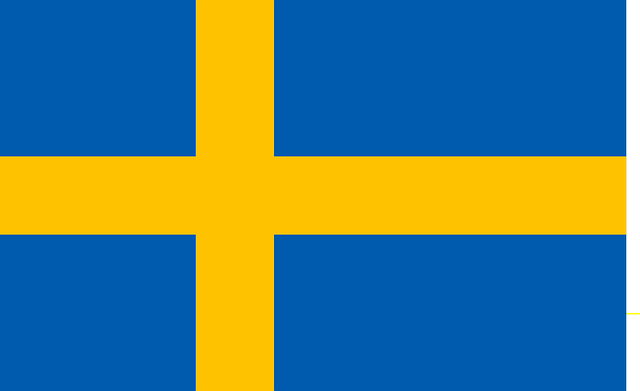

Sweden has always been considered a bastion of stability, economic prosperity, green energy, and more. Is it surprising that the country is home to over 1.12 million companies of various profiles? For instance, there are over 463 thousand service-providing organizations alone.
At first glance, starting a company in Sweden might not seem like a profitable venture, but no, anyone who decides to invest in the country will reap significant benefits.
The state offers various bonuses to domestic and foreign entrepreneurs, stimulating business development and creating favorable conditions for its growth.
This material from Lawrange experts will help you navigate all the nuances of entering the Swedish market.
Advantages of Registering a Company in Sweden
Registering a company in Sweden allows you to access all key segments of the European Economic Area (EEA) and even relocate to a country with practically unlimited potential.
Furthermore, the country’s authorities are interested in local and foreign investors developing the economy and further improving the quality of life in Sweden.
Therefore, favorable conditions have been created for doing business here that make starting operations and scaling up practically effortless. In addition to the mentioned benefits, entrepreneurs also receive:
- Ease of conducting business activities.
- Simple company registration procedures.
- Economic openness.
- Support for technological solutions and innovations.
- Assistance in startup development.
- Transparency and efficiency in regulation.
Let’s delve into each of these further.
Ease of Conducting Business Activities
Registering a company in Sweden is your chance to start working in one of the most stable and business-friendly regions. The country actively supports businesses, including foreign entrepreneurs, by providing them with favorable programs, simple tax rates, and full regulatory transparency.
This means that you can work without any issues, engage in the activity you prefer, and generate decent profits. The same goes for cooperation with local entrepreneurs willing to partner with new market players.
Simple Company Registration Procedures
Creating a company in Sweden is a straightforward and easy path to starting, developing, and transforming a business. Company registration takes comparatively less time and requires minimal resources than other economic zones and regions.
As an entrepreneur, you need only submit an application for business registration, obtain a residence permit and registration number, open a bank account, contribute share capital, and undergo regulator checks.
The procedure may be simplified or complicated in some cases, depending on the sphere of activity you’re launching in the country.
Economic Openness
Opening a business in Sweden means getting the opportunity to work with most regions, such as the EU, the US, Asia, and the CIS. The advantageous geographical location and air connectivity with various countries make the country one of the most convenient for trade activities and more.
Since Sweden is considered one of the best economic hubs, it attracts investments, creating a favorable climate for stable market players and newcomers. The latter, by the way, can receive additional benefits in the form of accessible mentoring programs and various specialized courses.
Support for Technological Solutions and Innovations
We recommend focusing on the technological segment if you plan to register a company in Sweden. This niche can be called one of the dominant ones in the region.
Moreover, there is a state support system in place for entrepreneurs who are creating innovations in both physical and intellectual formats.
Thus, specialized businesses can access technologies, equipment, and knowledge bases that will help them develop and scale faster.
Support for Startup Development
You can establish a company in Sweden by registering it as a startup. Initially, you will still need to obtain a work permit, but if relevant agencies appreciate your idea, you will receive government support and be able to attract investments more effectively. Moreover, you will also be granted preferential access to the best training programs.
Furthermore, with diligence, you can even turn your startup into a unicorn in this country and develop your own brand relatively quickly.
If you need assistance, the government operates several technological incubators that invest expertise and sometimes finances into promising projects.
Transparency and Efficiency in Regulation
Opening a business in Sweden means operating in a jurisdiction that respects laws and regulations. Consequently, you will not encounter bribery or other types of corruption here, allowing you to develop your business smoothly.
At the same time, you will also be required to maintain openness and transparency in your activities, comply with AML, KYC policies, as well as the country’s laws and regulations.
Before launching your business, regulators and government bodies will conduct checks and financial monitoring. However, in return, you will receive a work permit and practically full support from government agencies and financial institutions.
Requirements for Registering a Company in Sweden
As mentioned earlier, to open a company in Sweden, you will need to meet a number of state requirements. Generally, this does not pose difficulties for immigrants, as the registration rules are relatively simple and can be fulfilled by practically any average entrepreneur.
Order a consultation
Key requirements include:
- Presence of authorized capital.
- Formation of company structure.
- Creation of company names.
- Obtaining licenses and permits.
Nothing too complicated, right? However, you may still need qualified assistance from Lawrange or at least a consultation.
Presence of Authorized Capital
Registering a company in Sweden is not a cheap endeavor. This is due to the stable economy and a number of additional factors. However, the requirements for authorized capital are quite lenient, for example:
- The minimum contribution for a limited liability company is 50,000 SEK ($4,605.57 at the time of writing).
- The minimum capital requirement for companies with public liability is 500,000 SEK ($46,055.70 at the time of writing).
As for the upper limit, it does not exist.
Company Structure
Establishing a company in Sweden requires the owner to submit documented and verified documentation to the relevant regulators. This includes information about the organization’s structure and composition. This information must be completely open and honest and will be reviewed by specialized agencies.
This means that the structure should contain:
- Information about the company, its profile, and scale.
- Data on managers and shareholders.
- A detailed business plan for the next 3 years (minimum).
Without detailed documentation, your application will simply be rejected.
Company Name
Registering a company in Sweden requires naming the newly created organization. There are no specific restrictions or rules regarding the name.
However, the brand name should not mislead potential clients; on the contrary, it is considered good practice to use words in the name that symbolize the nature of the business, region, etc.
A bad name rarely becomes a reason for registration refusal, but there is no need to tempt fate. Need consultations on this matter? Contact Lawrange.
Licenses and Permits
To register a company in Sweden, you will need corresponding permits from specialized agencies and regulators. Different bodies issue licenses to operate in the region for each specific type of business.
Note: Some activities, such as banking services, insurance, or financial technologies, require additional licenses and permits.
Industrial and manufacturing organizations should also take care of additional documents legitimizing their activities, as well as environmental certifications.
Legal Forms of Business in Sweden
Before opening a company in Sweden, you need to determine its legal structure. You have several options to choose from:
- Sole Proprietorship.
- Limited Liability Company.
- Partnership.
- Public Limited Company.
- Branch.
It’s worth noting that each business form has its own advantages, so you need to carefully choose from the options provided.
Take a look at a brief description of each available type of enterprise to make the right decision about launching your brand.
Sole Proprietorship
A good option for those planning to work alone. For example, for marketers providing specialized services to companies or for accountants collaborating with businesses through outsourcing models.
It is similar to artisan crafts. For example, suppose you produce limited edition products, items made of leather, wood, metal, or engage in various types of repair work. In that case, this business format is quite convenient for such purposes.
No one restricts you in terms of the nature or profitability of your activities, but taxes will also depend on this.
Limited Liability Company (LLC)
Registering a firm in Sweden in the LLC format is perhaps the best choice for immigrants as it provides the opportunity to experiment with industries and the scale of the enterprise. The key stakeholder here can be just one shareholder, who is the owner of the business.
In some cases, a minimum of three investors on the board is required, especially if the company’s annual turnover exceeds the limits set by the legislation.
Also, in exceptional cases, one of the directors may be required to be a resident of the country (a citizen).
Partnership
You can create a company in Sweden jointly with a local entrepreneur or another business immigrant. In this format, the organization must have a charter, structure, and documented responsibility, with each stakeholder having an equal share.
Order a consultation
Unlike other company formats, there is usually joint liability here, where each investor strives to make the maximum possible contribution to the development of the business and covers the debts of partners.
The only downside to this format is that you must be more than 100% sure of your partners.
Public Limited Company (PLC)
Creating a company in Sweden using this format is allowed only if one of the directors has resident status in the country. Furthermore, they must have a key share in the organization, a local registration address, a bank account, and a high level of proficiency in the Swedish language (as well as English).
Additional requirements for the business include:
- Minimum statutory capital of approximately €46,000 (500,000 SEK).
- Three directors, one of whom is a resident.
- Minimum one shareholder (not among the directors).
Additional requirements may be imposed depending on the company’s field of activity. Lawrange consultants can help you learn more about them.
Branch
You will need permission from the authorities to open a business in Sweden without relocating the head office from another country. Note that one brand can create only one branch in the country.
The branch is subject to both the parent company’s policy and Swedish legislation, committing to fulfill the requirements, standards, and rules provided for specific types and formats of businesses.
By the way, this is the simplest way to start operations in the region, but it is also the most limited in terms of opportunities among the listed business forms.
Procedure for Registering a Business in Sweden
The good news is that registering a company in Sweden follows a very simple sequence of steps, including:
- Choosing the business structure.
- Selecting the company name.
- Preparing the necessary documents.
- Registering the company.
- Opening a bank account in a Swedish bank.
However, the bad news is that thorough preparation is required. You may also require assistance from Lawrange experts to expedite and streamline the process, increasing your chances of successfully obtaining a work permit.
Choosing the Business Structure
You can register a company in Sweden in one of the following formats:
- Sole Proprietorship
- Limited Liability Company (LLC)
- Partnership
- Public Limited Company (PLC)
- Branch
Each has its own advantages and can be changed to other formats in the future that better correspond to the current structure and scale of the enterprise.
Choosing the Company Name
You will need at least three name variations to open a company in Sweden. The state does not impose specific requirements on them, but it is not advisable to abuse this.
Choose a brand name that reveals the key value and direction of the business and is easily perceptible and readable (in Swedish or English).
Remember that the name is also the intellectual property, so it must be unique.
Preparing the Necessary Documents
Registering a company in Sweden is relatively straightforward but still subject to some bureaucracy. Thus, you need to prepare the document package in advance, including:
- Application form for company registration in Sweden
- Certificate of registration
- Memorandum of Association
- Articles of Association
- Power of Attorney
In some cases, additional information may be required from you, such as the registration address, source of capital, etc.
Company Registration
To create a company in Sweden, you must submit applications to several local authorities regulating business activities in the country.
You will be provided with application forms and examples directly at the institutions’ offices. Alternatively, you can turn to the Lawrange team, whose experts will independently go through the registration process on your behalf.
Opening a Bank Account in a Swedish Bank
Creating a company in Sweden is impossible without cooperation with local financial institutions. Therefore, you will need to open a bank account before transferring the statutory capital to the country.
Similar rules for bank registration apply to both residents and immigrants. Therefore, you will need a document confirming your identity, an individual number, and a mobile number.
Tax System in Sweden
If you want to open a business in Sweden, be prepared to pay taxes. The standard VAT rate is 25%. However, some categories of services and products have preferential rates.
For example:
Order a consultation
- Services related to food – VAT 12%.
- Cultural and sports events – 6%.
- Social, dental, banking, and insurance services – 0%.
In some cases, the tax system may be personalized for a legal entity or company, but this is more of an exception than a rule.
Financial Reporting in Sweden
All financial transactions conducted throughout the year must be reflected in the reporting. Reporting is submitted according to approved schedules by companies of all formats, scales, and types of activities.
Sweden rigorously and meticulously examines reporting (perhaps because it has one of the best economies in the world) and detects manipulations that can result in at least administrative liability for the entrepreneur.
Double Taxation Avoidance Agreements
You can freely trade with a number of countries without fearing double taxation. These countries include:
| Australia, Austria, Albania, Argentina, Bangladesh, Barbados, Belgium, Bulgaria, Bolivia, Botswana, Brazil | United Kingdom, Vietnam, Gambia, Germany, Greenland, Greece, Georgia, Egypt, Zimbabwe, Israel | India, Indonesia, Iraq, Ireland, Iceland, Spain, Italy, Kazakhstan, Kenya, Cyprus, Kyrgyzstan, China |
| Kuwait, Latvia, Lebanon, Lithuania, Luxembourg, Mauritius, Macedonia, Malaysia, Malta, Morocco, Mexico, Namibia, Netherlands | New Zealand, Norway, Oman, Faroe Islands, Pakistan, Peru, Poland, Romania, Singapore | Slovakia, Slovenia, USA, Tajikistan, Thailand, Tanzania, Trinidad and Tobago, Tunisia, Turkey, Uzbekistan, Ukraine |
| Philippines, Finland, France, Croatia, Czech Republic, Switzerland, Sri Lanka, Estonia | South Africa, South Korea, Jamaica, Japan |
State Support for Companies in Sweden
All companies operating in the region receive a full package of services and assistance from the state, such as access to talent pools, educational hubs, mentorship programs, mentoring, technologies, and special licenses. Also, all foreign entrepreneurs can apply for a residence permit and then for permanent residence or even naturalization.
Business Immigration Programs in Sweden
Three programs are available for entrepreneurs who want to start their business in the country and live there permanently.
Note that slightly different rules and requirements apply for immigrants simply moving to Sweden.
Entrepreneur Visa
The most common type of residence permit among foreign investors. Along with other documents, you need to submit a business plan and confirm the availability of funds. Then, you receive a residence permit valid for 2 years, with the possibility of transforming it into a permanent residence.
Startup Visa
The government issues a special type of permit through specialized agencies overseeing startups. Thus, you first need to submit your project to the regulator, which will assess it, assign a score and priority, and only then apply for the issuance of a specific visa.
Investor Visa
You can obtain a specialized permit by contributing a certain amount to the country’s economy. Note that when applying, you will receive bills and an estimated value of the investments that need to be transferred and confirmed, and only then submit a preferential visa application.
Company Registration Timelines in Sweden
Timelines may vary depending on the company’s format, ownership type, and business scale. Do not expect to be licensed in less than a couple of months from the application date. Also, keep in mind that regulators may have additional questions or requirements.
Indeed, this is one of the reasons for delegating the registration task to experts.
Why Choose Lawrange
The team has been on the market for over ten years and has successfully implemented hundreds of different projects, both in business registration and legal representation, advocacy, etc.
By collaborating with Lawrange experts, you not only get consultation but also a full range of services, including support, representation, or even independent business registration in practically any country in the world.
Conclusions
Sweden is a country of opportunities, stable policies, an economy, and a high standard of living. Therefore, this region is ideal for starting a business, especially considering the government’s friendliness toward foreign investments.
Support programs for companies and startups, ease of organization registration, and regulatory transparency—these are the perfect conditions for starting the process of creating a brand in Sweden without delay.
Not sure if you can do it all yourself? Just delegate this task to Lawrange experts.
FAQ
Can a non-resident open a company in Sweden?
Resident status provides some advantages to entrepreneurs and businesses, but it is possible to start a company without it or immediately apply for a residence permit.
How much does it cost to register a company in Sweden?
The statutory capital varies in the range of 50,000-500,000 SEK, but you also need to consider various fees, commissions, and taxes. To get an approximate estimate, send a request to a Lawrange manager.
What online options are available to register a company in Sweden?
You can submit an application and documents through specialized regulator portals, open an account, and get a personal identification number (PIN). However, you still have to visit the country to complete the process. You can also delegate the task to Lawrange and have representatives who will independently register the brand in the country at your disposal.
ORDER A REGISTRATION OF A COMPANY IN SWEDEN
 Telegram bot for quick communication with us