
As one of the oldest and most respected offshore centers globally, the British Virgin Islands continues to attract affluent individuals concerned about preserving their capital. Even after the introduction of new rules regarding the substance requirements for companies in 2019, this jurisdiction offers sufficient advantages to remain in the spotlight for interested parties. In particular, non-resident companies may not be required to comply with substance rules under certain conditions.
Important! Registering a company in BVI is a good decision for establishing a fund or trust, IT business, e-commerce, international trade, and many other purposes. In recent years, over 30,000 companies have been registered here annually. According to the latest published bulletin by the Financial Services Commission (FSC), as of the end of September 2023, the country had 370,500 registered companies.
If you are considering incorporating a company in BVI, read all the essential information about this jurisdiction in our material, and then contact Lawrange AA for consultation. We will enlighten you on critical legal nuances and dispel your doubts. In any case, we always have alternative options for registering a business in the best offshore jurisdictions on the planet for our clients.
Overview of the Jurisdiction
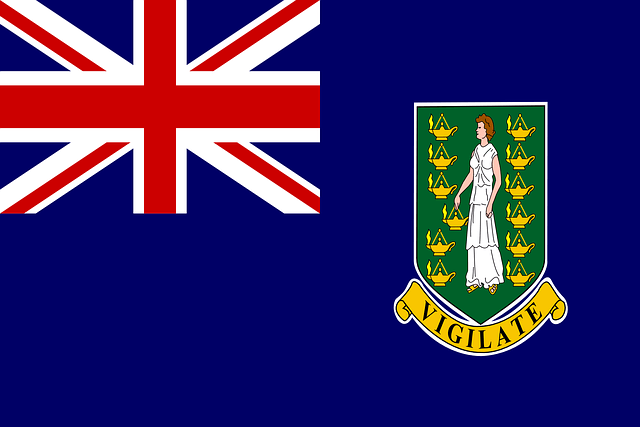
The British Virgin Islands are located in the Caribbean Sea, east of Puerto Rico, and consist of the main islands of Tortola, Virgin Gorda, Anegada, and Jost Van Dyke, as well as more than 50 other smaller islands and reefs, with about 16 of them inhabited. The total area of this British Overseas Territory is 151 square kilometers, and the population is over 35,000 people. The capital of the country is Road Town (on Tortola Island), the official language is English, and the main currency is the US dollar.
The country continues to be associated with the United Kingdom in defense and foreign policy matters. The legislative body of BVI is the Assembly. The main executive body is the Executive Council headed by the Governor, appointed by the UK Foreign Office. Registered foreign companies contribute significant revenues to the budget, contributing to the country’s economic prosperity and the relatively high standard of living of the population.
FYI! In response to concerns expressed by the EU and OECD, the British Virgin Islands authorities have amended their company legislation. Enterprises are now required to demonstrate genuine presence in the country. Moreover, as of January 1, 2023, all companies, with some exceptions, are obliged to submit annual financial statements to their registered agent within nine months after the end of each financial year.
Reasons for Registering a Company in BVI
The British Virgin Islands (BVI) are a tax-neutral offshore jurisdiction. The country operates under a territorial tax system. International companies registered in BVI but conducting business outside the country are not subject to corporate income tax. Additionally, the jurisdiction does not impose taxes on capital gains, dividends, interest, and inheritance.
Registering a company in BVI is a streamlined legal procedure. After incorporation, firms only need to adhere to a few simple rules to maintain a good reputation. This country offers a wide variety of corporate forms, allowing for various needs to be met and individual solutions to be found, aligning with specific business strategies and goals.
Important! The British Virgin Islands are one of the most popular offshore jurisdictions for establishing hedge funds and other investment structures suitable for a wide range of investment products and investors.
The legal framework of BVI offers reliable asset protection mechanisms, which can be particularly useful if the business strategy includes protecting intellectual property or financial assets. The country’s government continues to prioritize confidentiality. Information about the company’s owner is typically not publicly available, ensuring a level of anonymity that is hard to find in other jurisdictions.
Important! Like many other offshore jurisdictions, BVI has introduced economic substance requirements, which came into effect on January 1, 2019, for companies and limited liability partnerships and on July 1, 2021, for limited liability partnerships without legal personality. However, these rules do not apply to non-residents, meaning companies that are tax residents in other jurisdictions. On February 24, 2023, an updated version of the economic substance requirements was issued, providing special procedures for legal entities that are tax residents of Jersey, Guernsey, or the Isle of Man.
Interim conclusion: If a company registered in BVI proves that it is a tax resident of another jurisdiction and accordingly pays taxes there, it does not need to comply with substance rules.
Features of Registering a Company in BVI
A registered agent must be involved in the company registration procedure. The collected information by this official is entered into the BOSS (Beneficial Ownership Secure Search System) database – a secure system for searching for beneficial owners. It contains information about the beneficial owners of registered companies, i.e., persons holding 25% or more ownership.
If business owners plan for their company in the British Virgin Islands to be a non-resident, they must first meet certain conditions and then undergo a specific procedure. In other words, creating a company in BVI does not end with incorporation and opening a bank account. Another additional step is required.
Important! Two conditions must be met for a legal entity to be considered a non-resident:
- Being a tax resident in a jurisdiction outside BVI.
- The jurisdiction in which the company is a tax resident is not on the EU’s “blacklist.”
To have the International Tax Authority of the British Virgin Islands (ITA) consider the company as a non-resident, the company must submit a corresponding application supported by documentary evidence. This involves completing a form and uploading the necessary supporting documentation through the ITA online portal. After ITA approval, BVI will issue a certificate confirming the company’s exemption from reporting obligations for economic substance.
In particular, if a company claims to be a tax resident of Guernsey, Jersey, the Isle of Man, or some other jurisdictions, the ITA application should include:
- A tax residency certificate or similar document issued by the tax authority of another jurisdiction.
- Evidence of payment of corporate income tax in another jurisdiction.
- Tax returns submitted to the tax authority of another jurisdiction.
- A decision on the tax return from the tax authority of another jurisdiction.
Requirements for Opening a Company in BVI
While incorporating a firm in BVI cannot be deemed an excessively complicated procedure – in other jurisdictions, a much more arduous path is often required – the requirements and checks related to business-involved individuals have become stricter in recent years. In particular, beneficiaries and directors are more thoroughly scrutinized.
Company Name
The first step in the business establishment process is selecting a unique name for the enterprise. It is important to ensure that it is not identical to or too similar to the name of any other existing company in the British Virgin Islands. This name should not include certain words implying government affiliation. The chosen name is checked for availability in the BVI company registry.
FYI! For those planning to register a company in BVI in the near future but are currently postponing necessary actions, there is an option to reserve the chosen name for a specified period.
Important! The company name must end with a word, phrase, or abbreviation denoting the organizational and legal form of the business, such as Limited (LTD), Corporation (CORP), Incorporated (INC), or Societe Anonyme (S.A.).
Authorized Capital
Since the amount of authorized capital is not specified in the articles of incorporation, the business owner is entitled to decide the exact amount to deposit into the bank account. The standard currency for this is the U.S. dollar.
FYI! Typically, the authorized capital size of companies in BVI is up to $50,000 USD. Exceeding this limit will increase government fees, affecting the cost of registration and annual renewal.
Minimum One Shareholder and One Director
As in other well-known offshore centers like Cyprus, Seychelles, and Belize, establishing a business in BVI requires at least one shareholder (founder) and at least one director. These can be both natural and legal persons, not necessarily residents.
Order a consultation
FYI! With the enactment of amendments to the British Virgin Islands Business Companies Act from 2022, information about company directors can be obtained upon request to the registrar.
Organizational and Legal Forms of Companies in BVI
In this jurisdiction, it is entirely possible to choose a form of conducting business that best corresponds to business ambitions, scale of development, and owners’ goals. This applies to both investment strategies and asset protection. Let’s consider below the specific organizational and legal forms in which company registration is possible in the British Virgin Islands.
Company Limited by Shares
Ideal for most businesses, this type of firm represents a separate legal entity where shareholders’ liability for debts is limited to their shares. This organizational and legal form is often used for international trade and investments. Such entities are often referred to as International Business Companies (IBC).
Company Limited by Guarantee without Authority to Issue Shares
This form is used when capital is not planned to be raised through share issuance. Members act as guarantors for the company’s obligations, with liability limited to a guaranteed amount agreed upon by the members in case of the company’s liability to creditors or liquidation. Non-profit organizations typically choose this form.
Unlimited Company Authorized to Issue Shares
A less common business form that allows for share issuance while shareholders’ liability for company debts remains unlimited.
Unlimited company that is not authorised to issue shares
Participants’ liability is unlimited. They have a joint obligation to settle financial commitments in case of official liquidation. Only the company’s assets can be used in the ordinary course of business, and participants’ assets are separate.
BVI Business Company
This is a public company that can list its shares on the stock exchange. These companies are larger and subject to stricter rules and reporting requirements. However, they have broader opportunities for capital raising.
Segregated Portfolio Companies
Legal entities where assets and liabilities are segregated into different portfolios, which can be useful for managing various investment projects or asset protection strategies. SPCs are popular among insurers and investment funds.
Restricted Purpose Company
The term “restricted purpose” implies that such a company can only engage in transactions within specific purposes outlined in the memorandum. It is commonly used for securitization, joint ventures, and real estate management. Another use of this organizational and legal form is creating financial companies to provide guarantees and sureties.
In addition to the above list, hybrid organizational and legal forms of conducting business are used, such as a company limited by guarantees with the right to issue shares.
Note! The British Virgin Islands offer a developed fund market with diverse and individual structures suitable for the needs of various managers and target investors. As of September 30, 2023, the total number of investment funds registered with the Financial Services Commission (FSC) was 1,978, including 841 professional and 284 private funds.
Restrictions on Specific Types of Activities
Certain activities in the British Virgin Islands require licenses. These include banking and financial services, insurance, fund management, and trusts.
Note! The British Virgin Islands restrict gambling businesses. Therefore, if you plan to establish a company in BVI in this sector, you should consult with a lawyer beforehand. In August 2020, the BVI abolished direct restrictions on gambling and replaced them with a new licensing regime under the Gambling and Betting Control Act. This law applies to entities operating in the “gaming and betting sector,” including “the development, sale, supply, installation, or adaptation of gaming software” and “provision of betting opportunities of any kind.”
The Virtual Assets Service Providers (VASP) Act came into effect on February 1, 2023. The VASP Act establishes a legal framework for the registration and supervision of cryptocurrency exchanges, exchangers, and similar business entities.
Company Registration Procedure in BVI
Let’s consider the basic steps that need to be taken:
- Lawrange AA receives a request from the client and sends an individual commercial proposal, indicating the exact cost of services and the list of necessary documents.
- The client pays the invoice and sends us the relevant materials by email. Then, documents certifying the identity of shareholders and directors are notarized.
- We check the availability of the chosen company name in the registry of companies in the British Virgin Islands (it is advisable to provide three options in advance).
- We develop and submit the company’s constitutional documents to the registrar, who issues a Certificate of Incorporation.
- Afterward, we prepare other necessary corporate documents and send them to the client for signature.
Required Documents
To register a company in BVI, you need to prepare:
- Passports of shareholders (founders), directors, and proof of their registered addresses (utility bill receipts are acceptable);
- Memorandum of Association – this document should specify the business directions, goals, and shareholders’ responsibilities;
- Articles of Association with rules for internal management and company operations;
- Optionally, a business plan.
Note! These documents must comply with the laws of the British Virgin Islands and local corporate practices. If establishing a resident company, a registered agent must be appointed who must be located in the BVI. The registered office on the islands should be specified as the official address for correspondence.
Passport Copies
A passport with international validity is suitable. Copies of passports must be properly notarized. Depending on the client’s situation, we can individually instruct on the most convenient way to do this. A certified translation should be prepared if any identity documents are not in English.
Residential Address of Shareholders
The document package must include confirmation of the current residential addresses of shareholders and directors. Such confirmation can be provided by:
- Utility bills.
- Bank account statements.
Business Plan
A detailed business plan is not always required and depends on the planned activities. If it needs to be developed, the focus should be on the financial stability of the business, long-term development prospects, partners, and investors.
Order a consultation
Company Name Verification
The company name undergoes a check for uniqueness and compliance with certain requirements in the country’s company registry. Names using foreign characters are allowed. For example, Chinese characters are widely used in names. This helps companies from China, Hong Kong, and Taiwan expand their presence in the international market.
However, an English equivalent must be selected for such a name, which does not necessarily have to be an exact translation or transcription of the foreign name. At the same time, the foreign name must be reflected in the company’s constitutional documents alongside English. It also needs to be included in all written communications and legal documents issued by or on behalf of the company.
Document Submission for Registration
Documents can now be submitted electronically to the Registrar of Corporate Affairs of the British Virgin Islands (BVI Registrar of Corporate Affairs) by filling out the appropriate forms and uploading files (memorandum, articles of association, etc.). To avoid delays, ensure that all information is accurate and complete. An official fee is charged for submitting an application for company registration to the government of the British Virgin Islands.
Company Registration in the British Virgin Islands
The result of registration is the issuance of a corresponding Certificate of Incorporation. This document officially confirms the existence of your company in accordance with the legislation of the British Virgin Islands.
Document Notarization (upon request)
Lawrange AA can arrange for the notarization of your company’s registration documents in the British Virgin Islands by a notary and legalization at the consulate of the jurisdiction. The cost of this service will be provided upon request.
The basic service package includes only an electronic registration certificate. It is issued by default by the registrar. If a paper copy is required, you must inform us separately.
Taxation of Companies in the British Virgin Islands
This jurisdiction does not impose a corporate income tax, making it attractive to companies seeking to minimize their tax burden. However, there are annual licensing fees and other taxes, including stamp duty, payroll tax, and social security contributions. The firm only pays payroll tax if it employs local labor. Stamp duty is not levied on transactions and documents related to the transfer of any type of property, shares, securities, or debt obligations, except for land transfers on the islands.
Note! According to international experts’ classification, the British Virgin Islands are not tax-free but a tax-neutral jurisdiction. This means that no taxes are levied on income or capital gains, and there are no withholding taxes on companies and individuals.
Foreign companies in BVI must pay the government an annual fee based on the maximum share size and the specific date of commencement of activities. If the authorized capital does not exceed $50,000, the fee is $350; if it exceeds, it is $1100.
Note! The British Virgin Islands have signed agreements with Switzerland and Japan on the avoidance of double taxation.
Financial Reporting and Audit
Amendments to the British Virgin Islands Business Companies Act of 2004 and the British Virgin Islands Business Companies Regulations, which came into force on January 1, 2023, require companies to submit an Annual Financial Report (AFR).
Such reporting is submitted to the company’s registered agent in the British Virgin Islands within nine months after the end of the financial year. For companies confirming their non-resident status, there are certain nuances – we can clarify them on an individual basis.
Opening a Bank Account in the BVI
If a company is registered in the BVI with non-resident status, it is better to open an account for such an enterprise not on the islands but in another offshore jurisdiction. For example, this could be a corporate account in an international bank in Hong Kong, Singapore, or other jurisdictions. However, banks often require directors and shareholders to personally visit their branches for comprehensive checks.
Our services include preparing corporate documents in accordance with the bank’s requirements, pre-checking documents for opening an account, liaising with bank staff, and organizing a meeting with them for you.
Registration Timeframes for BVI Companies
In general, it takes 7-10 days to register an offshore company in the Virgin Islands. The main part of the time is spent on preparing and sending documents. If all documentation is in order and prepared correctly, there are no delays from the registrar’s side.
Why Choose Lawrange
By turning to us, the client invariably receives a turnkey solution to their task, with the opportunity to resolve additional issues. Our team:
- Advises on international corporate structuring.
- Answers all client questions regarding the registration and maintenance of companies in the British Virgin Islands.
- Conducts a comprehensive client check, including document verification and address confirmation, eliminating the risk of unpleasant surprises during registration.
- Searches for and reserves the company name.
- Prepares constitutional documents for the enterprise and submits them to the registrar.
- If necessary, provides a solution for the registered office and registered agent.
- Supports the opening of a corporate bank account.
Conclusions
Registering a business in the British Virgin Islands is still a profitable offshore solution. If activities will be conducted outside the jurisdiction and can be documented accordingly, there is no need to ensure the company’s economic presence in the BVI.
As practice shows, the requirements for foreign enterprises by the local government are quite feasible. The main thing is to constantly monitor legislative changes and respond to them, that is, always have the support of good and experienced lawyers in international business.
FAQ
Can a non-resident open a company in the BVI?
Yes, of course. This possibility existed and remains now, even after numerous legislative changes. Non-residents can be both beneficiaries and directors of the enterprise.
How much does it cost to register a company in BVI?
The main expenditures include the administrative registration fee, document notarization, lawyer services, registration agent, provision of a legal address, and so on.
Are companies in the BVI subject to corporate income tax?
No. And this is one of the main arguments in favor of opening a company in the BVI. The firm only needs to pay an annual contribution to the state treasury. Obligations to pay other taxes and fees do not always arise, mainly because this concerns resident companies.
ORDER A REGISTRATION OF A COMPANY IN BVI
 Telegram bot for quick communication with us