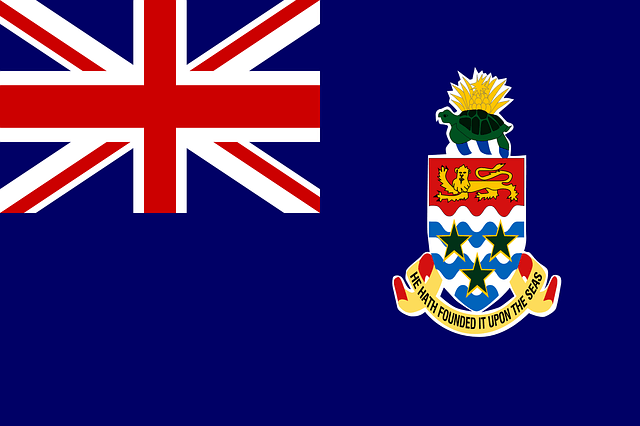

For those interested in offshore centers, the Cayman Islands are renowned as one of the best jurisdictions globally for establishing a foreign company and international tax optimization. The first offshore entity was established here as early as 1966. According to the Cayman Islands General Registry statistics, as of the first quarter of 2024, nearly 120,000 companies are registered in the country, almost twice the population of the Cayman Islands..
If you are considering setting up a company in the Cayman Islands today, it remains a timely and advantageous decision, despite recent steps towards stricter regulations for foreign investors in response to global requirements.
Lawrange LLC will handle all legal nuances, and soon you could be the owner of an Exempted Company, exempt from taxes and benefiting from various privileges. Alternatively, you may choose another organizational form for your business. However, 88.7% of the 120,000 registered entities on the islands are Exempt Companies, which speaks volumes.
Jurisdiction Overview
The Cayman Islands are an archipelago in the western Caribbean Sea, adjacent to Cuba and Florida to the north, Mexico to the west, Belize, Guatemala, and Honduras to the southwest, and Jamaica to the south. This strategic location provides easy access to the USA, UK, Canada, and other countries across the globe.
As a British Overseas Territory, the islands have a population of approximately 85,000 people as of 2023. The Cayman Islands boast the highest standard of living in the Caribbean Basin and are among the highest worldwide. The national currency is the Cayman Islands Dollar (KYD), though the US Dollar and Euro are widely accepted.
Advantages and Limitations of Opening a Company in the Cayman Islands
The Cayman Islands are known for their political and economic stability, favorable conditions for business registration, a developed service sector, and a qualified workforce. The jurisdiction still ensures a certain level of business confidentiality. All lawful activities are permitted on the islands, though some types of entrepreneurship require licensing, such as banking, insurance, and trust services.
Limitations/Drawbacks: One of the country’s drawbacks is its established offshore reputation. The Caymans are regarded as an offshore jurisdiction by Ukraine and some other countries. However, the European Union has “delisted” the islands from its blacklist. On January 18, 2024, the European Commission published Delegated Regulation (EU) 2024/163 of December 12, 2023, which excludes the Cayman Islands from the list of high-risk third countries for money laundering and terrorist financing.
This decision was based, in part, on the latest information from the FATF. The European Commission acknowledges the progress made by the Cayman Islands in strengthening their AML/CFT system. The Delegated Regulation came into force on February 7, 2024, 20 days after its publication in the Official Journal of the European Union.
Demand Sectors
The Cayman Islands’ economy is predominantly driven by tourism and finance sectors, with a significant number of international financial institutions and resort hotels calling the Cayman Islands their home. Among the many companies registered on the islands, approximately 500 are banks.
In addition to tourism and financial services, noteworthy sectors include:
- Imports. A substantial portion of the islands’ economy depends on imports.
- IT Sector and FinTech. Favorable conditions have been created in the jurisdiction for the development of small app developers as well as large-scale projects.
- Food Industry. Production of local food products helps reduce dependence on imports.
- Real Estate. The country has a developed market for residential and commercial real estate with numerous investment opportunities.
- Cryptocurrency Sector. Since 2020, licensing has been introduced for this sector in the country.
Remote Registration Possibility
It is possible to register a company in the Cayman Islands completely remotely. This means that both individual persons and businesses are allowed to establish companies without physical presence in the jurisdiction. Such an approach is advantageous for international entrepreneurs and investors who seek to utilize the business-friendly environment of the Cayman Islands. Necessary documents can be submitted online.
Important! To avoid errors during remote registration, it is advisable to seek assistance from an experienced partner. AA Lawrange can serve as such a partner. Our team’s participation and support ensure the seamless creation of a legal entity in accordance with established standards, thereby mitigating potential issues due to overlooked details in the future.
Approach to Foreign Investments
The popularity of the Cayman Islands among foreign investors is attributed to its tax neutrality, proximity to the USA, and special legislation providing a secure space for investments. The jurisdiction has endeavored to streamline much of the bureaucratic burden associated with incorporation and business operations, yielding very positive outcomes.
Legal System
The legal system of the Cayman Islands is based on English common law. The legal and judicial systems are continuously enhanced to bolster the islands’ security and reputation. Local courts administer justice in accordance with the constitution, laws of the islands, and established principles of common law developed by local, British, and other Commonwealth courts. Complex commercial and trust disputes are adjudicated by The Grand Court.
Legal Forms of Business in the Cayman Islands
Foreign entrepreneurs in the jurisdiction have access to a comprehensive range of legal instruments for various business models. This includes the option to register a company in the Cayman Islands for the purpose of forming a holding structure, i.e., for owning other companies or assets.
Next, let’s consider the organizational and legal forms of companies in the Cayman Islands, according to information from the Cayman Islands General Registry.
Resident Company
A local entity conducting business in the Cayman Islands. Resident companies are required to maintain a register of current and former shareholders accessible at their office for public inspection. They must also annually report to the Registrar, disclosing the names and addresses of shareholders and directors, as well as the amounts of paid-up capital. These companies are permitted to own land.
Non-Resident Company
Such companies attain non-resident status by submitting a declaration to the Minister of Finance through the company registrar, stating their intention not to conduct business in the Cayman Islands. Only activities necessary for the development of the company’s overseas business are allowed directly on the islands.
These companies are required to maintain a register of current and former shareholders accessible at their registered office for public inspection. They must also report annually to the registrar. A non-resident company may convert to a resident company or an exempted company.
Exempted Company
The most popular organizational and legal form for conducting business among foreign entrepreneurs on the islands.
If you establish a business in the Cayman Islands under this form:
- There is no requirement to keep a shareholder register open for public inspection (a requirement for resident and non-resident companies).
- There is no need to hold annual general meetings on the islands.
- Memorandum and Articles of Association can be amended without restriction, by notifying the registrar.
- Shares can be issued with or without nominal value.
- Capital can be expressed in any currency or multiple currencies.
- In the annual return to the registrar, only confirmation of no changes to the Memorandum and Articles, compliance with laws, and no activity within the islands is required.
Important! Starting January 1, 2024, the registration fee for Exempted Companies is:
- For authorized share capital from $0 to $42,000: $700 to $825
- From $43,001 to $820,000: $1,000 to $1,125
- From $820,001 to $1,640,000: $1,984 to $2,109
- Above $1,640,000: $2,568 to $2,693
Note! Exempt Companies include two specific types, each described below.
Exempted Limited Duration Company (LDC)
This organizational and legal form provides limited liability to its participants. The Articles of Association of such a company specify a date or event upon which the legal entity ceases to operate. The maximum duration for an LDC can be up to 30 years. Unlike other forms of entities, an LDC requires a minimum of two participants (shareholders).
Order a consultation
Upon expiration of its duration, voluntary liquidation commences automatically. However, the company can be dissolved prematurely if the participants resolve accordingly. Creditors have recourse to compulsory liquidation (bankruptcy) procedures.
Note! The registration fee for establishing an LDC is $200 USD plus the standard registration fee for an Exempted Company. The annual fee is the same as for tax-exempted companies.
Segregated Portfolio Company (SPC)
This organizational and legal form allows segregating assets and liabilities of individual portfolios, known as “cells,” from the general assets of the company and from other portfolios in certain jurisdictions. However, each portfolio is not considered a separate legal entity. Besides the annual return, an SPC must file reports on the turnover within each portfolio throughout the year.
Note! Fees for an SPC are:
- Registration: $500 USD + standard Exempted Company registration fee.
- Annual fee: $2,000 USD + standard Exempted Company fee.
- Annual portfolio fee: $300 USD per portfolio, up to a maximum of $1,500 USD.
Limited Liability Company (LLC)
Participants in such a legal entity enjoy limited personal liability for the debts or obligations of the company. An LLC does not have share capital, but participants acquire a stake in the statutory capital. The management of an LLC is carried out by its participants and/or managers.
The legislation allows for mergers, consolidations, or conversions of existing companies in the Cayman Islands into LLCs, as well as permits organizations from other jurisdictions to re-domicile and continue operations in the Cayman Islands as LLCs.
Unlimited Company
Participants/shareholders of such a company bear joint and several unlimited liability to cover any shortfall in the company’s assets for debt settlement in case of liquidation. The number of participants and the amount of share capital (if any) must be specified in the Articles of Association.
Special Economic Zone Company (SEZCo)
The Cayman Islands’ Special Economic Zones (SEZs) were established in 2012 to stimulate economic growth, attract direct foreign investment, promote technological innovation, create new types of employment, and assist in diversifying the islands’ economy.
A Special Economic Zone Company (SEZCo) is a specific form of tax-exempt company in the Cayman Islands holding a license or permit to operate within the Cayman Islands’ Special Economic Zone. To qualify as an SEZCo, the company must demonstrate that its primary purpose is conducting business predominantly outside the islands.
Overseas Company
An Overseas Company is one established outside the Cayman Islands. Registration within the islands is required for owning land or conducting business here.
Foundation Company
A Foundation Company is a separate legal entity with characteristics similar to a corporation, possessing legal personality and limited liability. Foundations can be created for any lawful purpose, whether commercial or non-commercial. Like other types of companies in the islands, a foundation is registered based on its memorandum and articles, defining the rights and duties of various parties involved in its management and benefit.
Foundations are prohibited from distributing dividends or other profit or asset distributions among participants. The foundation’s secretary must hold a license or permit to provide management services within the islands.
Association Not for Profit
Such an organization is formed to promote trade, arts, science, religion, charity, or other beneficial purposes, which must be demonstrated. All income, if any, must be applied towards achieving the stated objective; distributing dividends or sharing profits in any other manner is not permitted. An Association Not for Profit is not required to disclose its participants to the registrar or pay an annual fee.
Registration Features of Companies in the Cayman Islands
As in other jurisdictions, registering a firm in the Cayman Islands involves submitting a specific set of documents to the Registrar, paying a fee, and obtaining the corresponding certificate. The document package includes a signed registration application containing key information about the company.
However, if a foreign entrepreneur incorporates a tax-exempt company on the islands, there is an important caveat to consider. The company must submit a declaration to the Registrar stating that its activities will be conducted outside the Cayman Islands. Furthermore, each January, the company must submit a report to the Registrar confirming compliance with this condition during the previous calendar year.
Key Requirements During Offshore Company Registration in the Cayman Islands
Substance criteria (economic presence) need to be adhered to only for certain types of activities, including fund management, banking business, insurance, finance, and ship leasing. Other requirements discussed below apply to all enterprises.
Authorized Capital
There is no minimum statutory capital requirement set by law. Formally, companies can be registered with a capital of $1 USD or its equivalent in another currency. In practice, business owners determine the size of the statutory capital at their discretion. It is advisable for the statutory capital of a company not to exceed $50,000 USD, which allows for minimal registration and annual fees.
Director and Shareholders
Establishing a company in the Cayman Islands is permitted with only one participant, who may also serve as the director/officer of the organization. The only exception is an Exempted Limited Duration Company, which must have at least two participants. Participants (shareholders) can be individuals or legal entities without residency restrictions. Nominee shareholders are permitted.
Company Name
The company’s name must be unique and not identical or similar to existing names. Foreign language names must include an English translation. Additionally, certain words such as Royal, Municipal, Imperial, Empire, and others cannot be used. Some words in the name may only be used with the appropriate permission.
Confidential Information
Since 2020, company registries have become open. Key information about legal entities, including data on directors, can be found there. However, searches can only be conducted by company (one cannot input a person’s name and find out which companies they direct), and results show current directors only (not former ones). Information about beneficiaries is not publicly accessible.
Local Address
Every enterprise must have an address in the Cayman Islands. Typically, this is the address of the registration agent’s office (Registered Agent), where correspondence from government agencies is received.
Steps for Company Registration in the Cayman Islands
Step 1: Project Planning
Define the purpose of incorporating a legal entity in the Cayman Islands, choose the organizational and legal form, and determine the structure of participants (shareholders) and their ownership percentage. All of this is done in consultation with specialists from AA Lawrange.
Step 2: Document Collection
The package must include passports and proof of addresses of participants and directors. Several company name options and constitutional documents also need to be prepared.
Order a consultation
Step 3: Offshore Company Registration in the Cayman Islands
This stage takes approximately up to one week and involves submitting documents to the Registrar. To ease clients’ concerns, we promptly provide updates on progress. Registration results in the issuance of the corresponding certificate.
Step 4: Opening a Corporate Bank Account
This process can take up to a month as approval from the client’s chosen bank cannot be guaranteed. However, alternative options are always available through our network.
Choosing the Organizational and Legal Form of the Company
This choice influences both daily operations and the level of protection for personal assets. For instance, a standard resident company can operate in the Cayman Islands but must maintain a register of current and former participants at its registered office, accessible to the public. This might include retail trade, real estate, hotel, or restaurant businesses.
At least 60% of the statutory capital of such a company must belong to Cayman residents. If less than 60% is controlled by Cayman residents, apart from trading and business licenses, a Companies (Control) License (LCCL) is required.
The most optimal offshore form in the Cayman Islands is the Exempted Company, exempt from local taxes, created for conducting business outside the country. To obtain this exemption, the relevant application must be submitted to the Registrar. Reminder: 88.7% of legal entities in the Cayman Islands operate in this form.
Choosing and Reserving the Company Name
The uniqueness of the name is verified against the company registry, after which it can be reserved for a period. For an Exempted Company, it is not mandatory to add a suffix indicating limited liability (e.g., Limited). Information about the organizational and legal form will be in the constitutional documents.
Document Preparation
To incorporate a company, passports and proof of addresses of participants and directors, a completed registration application, Memorandum, and Articles are required. Additionally, a declaration of compliance to the country’s laws and regulations (The CRS Compliance Form) is needed, confirming readiness to comply with local laws.
Important! The Registrar accepts constitutional documents only in English. Organizations registered in non-English jurisdictions must provide original documents plus an English version translated by a certified translator.
Opening a Bank Account in the Cayman Islands
Setting up accounts for offshore enterprises is now more challenging than before due to international rules and requirements. Banks have their own criteria and standards for account opening, so it is not possible to guarantee account opening in any specific bank. Nevertheless, engaging AA Lawrange is team ensures resolution of account-related issues through various means.
Tax System in the Cayman Islands
The Cayman Islands maintain a tax-neutral status, providing residents with freedom from all direct taxes, which creates substantial incentives for both business activities and efficient management of personal finances. There are no taxes on income, capital gains, property, or salaries. Government revenues are primarily generated through alternative means such as fees for staying in the country, tourism on cruise ships, work permits, imports, and others. The majority of revenue also comes from fees for company registration and annual renewals.
Exempted Companies, which operate as classic offshore entities, are exempt from taxes and are not permitted to conduct business within the jurisdiction. An exempted company is required to pay an annual fee each January, with penalties imposed for non-payment.
Financial Documentation and Reporting
Exempted Companies are not subject to audit requirements. They are only required to maintain standard accounting records (including contracts and invoices for at least 5 years) and submit an annual report to the registrar confirming that the company has not engaged in commercial activities within the islands.
Double Taxation Agreements
The Cayman Islands have only one double taxation agreement in place, which is with the United Kingdom. However, the jurisdiction has signed dozens of agreements for the exchange of tax information and is expanding its network of legal cooperation agreements, enhancing its reputation internationally.
Company Registration Timelines
Excluding the preliminary document collection and preparation stage, company registration in the Cayman Islands can typically be completed within 3-5 business days, and in some cases, as quickly as within 24 hours with the express registration service offered by registrars.
Cryptocurrency Business in the Cayman Islands
On May 25, 2020, the Cayman Islands enacted the VASP (Virtual Asset Service Provider) Law, marking the beginning of state regulation of cryptocurrency activities. This law aims to align with global norms ensuring consumer protection and compliance with AML/CFT rules. Licensing requirements were introduced for cryptocurrency activities.
However, cryptocurrency licensing in the Cayman Islands now offers broad opportunities for entrepreneurs. The jurisdiction’s status has significantly elevated. On February 13, 2024, the Ministry of Financial Services of the Cayman Islands (MFS) published amendments to the VASP Law. However, the timelines for full implementation of all provisions of the law remain undefined.
Currently, the Cayman Islands should be considered a leading global financial and cryptocurrency center, an ideal location for fintech companies. The VASP Law provides the foundation for a thriving and well-regulated virtual asset industry. With the adoption of amendments to the VASP Law, clarity and transparency will be further enhanced.
In this regard, Lawrange experts are prepared to provide all necessary support for obtaining a cryptocurrency license for your company, both now and in the future. We closely monitor legislative changes in the jurisdiction and stay updated on regulator requirements – the Cayman Islands Monetary Authority (CIMA), thereby always providing valuable assistance to our clients.
Risks for Companies Conducting ICOs
Considering the Cayman Islands as an option for registering a company for token issuance and distribution, it cannot yet be asserted as the ideal choice due to some legal uncertainties in this area. However, it is hopeful that with the adoption of amendments to the VASP Law, all ambiguities will be addressed, making the jurisdiction an international leader in the issuance of tokens and derivative virtual assets.
Why Choose Lawrange
Even if, based on everything discussed, you think that establishing a company in the Cayman Islands is simpler than it actually is, simplicity is attainable for those who have accumulated the necessary experience and know-how to avoid pitfalls.
The most convenient way to establish an offshore company in this jurisdiction is to seek assistance from us, professionals with years of experience. We offer effective solutions to all issues that may arise on the path to achieving your goals. This includes providing a registered agent, nominal shareholders and directors, and organizing company management under the guidance of the beneficial owner, among other services.
Conclusions
The Cayman Islands, an offshore jurisdiction, has successfully rehabilitated its reputation and is no longer included in the European Union’s blacklist. Nonetheless, it remains attractive to investors, entrepreneurs, and affluent individuals who prioritize capital preservation. The jurisdiction offers an appealing organizational and legal framework through Exempted Companies, which are tax-exempt entities. This versatile structure is suitable for achieving a variety of objectives.
Currently, the Cayman Islands are establishing a favorable legal foundation for cryptocurrency projects. Lawrange experts are prepared to assist clients in obtaining licenses for cryptocurrency-related businesses. We recommend starting with a consultation to determine if this aligns with your goals.
FAQ
What are the registration timelines for companies in the Cayman Islands?
Standard registration typically takes 3-5 days (excluding document preparation). Express registration can be completed within 24 hours.
Can foreign citizens register a company in the Cayman Islands?
Yes, founders/participants/shareholders and directors of a company in the Cayman Islands can be citizens or legal entities from any country worldwide.
Can I manage a company in the Cayman Islands from another country?
Yes, there is no requirement for Exempted Companies to hold annual general meetings on the islands. Such meetings can be conducted anywhere globally or online. Keeping minutes of meetings is permissible in any location specified in the company’s documents.
ORDER A REGISTRATION OF A COMPANY IN THE CAYMAN ISLANDS
 Telegram bot for quick communication with us