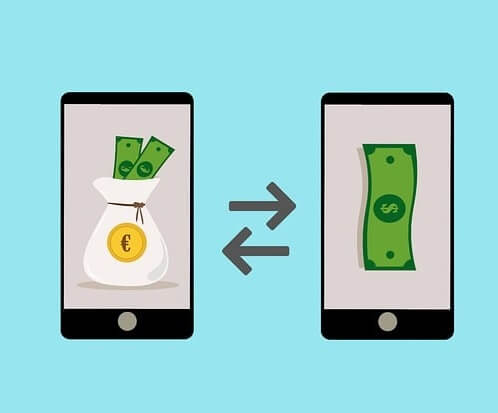

An EMI (Electronic Money Institution) license is issued to a legal entity to conduct electronic money transactions. Its main difference from a banking license is that it does not permit lending and receiving deposits.
Such companies have the right to:
- issue digital money;
- open accounts for individuals and legal entities (including correspondent accounts);
- create their own payment system;
- register electronic wallets;
- deposit cash;
- transfer virtual money from one account to another;
- initiate payments;
- provide information on the user’s active account;
- work on behalf of SWIFT (Society for Worldwide Interbank Financial Telecommunications);
- issue VISA and MasterCard cards;
- transfer funds from a corporate account to a person’s cards.
Institutions with EMI license are becoming increasingly popular as they can offer their clientele convenient and flexible payment instruments. The main advantages of EMIs over traditional banks are: round-the-clock services, fast money transfers.
Electronic money license Sweden is indefinite. It is issued once, but can be revoked for serious financial irregularities or proven fraud.
Benefits of the Swedish EMI License
At the moment, Sweden is actively attracting innovative companies from all over the world. The EMI license in Sweden plays an important role here, enabling organizations to issue virtual currencies and offer electronic payment services.
Advantages of an EMI license in Sweden:
- access to the EU market, which allows unhindered operation in the territory of member states, significantly expanding the customer base and increasing volumes;
- greater flexibility and versatility, as companies can not only issue digital currency and make electronic payments but also offer a wide range of financial services;
- increased credibility and confidence of customers and potential partners in the business;
- control over their transactions by reducing dependence on third-party payment systems;
- increased ability to customize services to meet customer requirements.
If you plan to expand your business into the EU industry, then obtaining an EMI license in Sweden is the right strategic move.
Tax Incentives for Swedish Businesses
As such, there are no special tax incentives for companies in Sweden. There are generally applicable favorable tax regimes in the state.
For example, a savings reserve allows firms to contribute 25% of their taxable income. Each year, such contributions form a savings reserve, which is tax-free but must be returned to the state no later than six years after its allocation. A standard income is accrued on the accumulated reserve balance at the rate of 72 percent of the interest rate on debt securities.
Advanced Technological Education and Skilled Labor Force
In Sweden, about 40 percent of the population has a university degree – these are members of the highly skilled workforce. There are 12 universities in Stockholm alone. STEM (Science, Technology, Engineering, and Mathematics) is a priority in the education system.
Government Support and Benefits for Entrepreneurs
There is government support for entrepreneurs in Sweden, which encourages the hiring of foreign workers for key positions. Such personnel may be granted a special privilege, according to which 25 percent of income is exempt from income tax.
The country actively incentivizes R&D activities by reimbursing the employer’s monthly costs. This helps to reduce labor costs.
Requirements for Obtaining an E-money License in Sweden
To register an EMI license in Sweden, a company must meet the following criteria:
- be a legal entity registered in Sweden (or another EU jurisdiction);
- employ all management personnel who are residents of the country;
- have an effective risk management system (assessment and monitoring of possible threats);
- implement strict Anti-Money Laundering (AML) and Know Your Customer (KYC) procedures;
- open a business account with a reputable bank;
- have authorized capital: €125,000-350,000 in Swedish kronor (SEK) equivalent, depending on the type of services provided.
The owners of the company need to have an unblemished reputation and financial knowledge and skills. Documentation must also be prepared to comply with the regulatory requirements of the jurisdiction.
The process of obtaining such a license is clearly regulated by Finansinspektionen, the regulatory body that oversees all financial institutions in the country.
Employee Hiring and Qualification Requirements
A company applying for an EMI license must have at least four or five local employees in its management. The positions to be focused on are:
- Chief Executive Officer (CEO).
- Director of Money Laundering Reporting Operations (MLRO).
- Chief Operating Officer (COO).
It may also be necessary to hire Swedish residents for the positions of Chief Technical Officer and Chief Financial Officer.
All employees of the office are required to have sufficient qualifications and relevant education. When applying for a license, CVs of actual people employed by the company must be submitted.
Understanding Start-Up Capital Requirements
The minimum start-up capital requirements are:
- €125,000 – for payment organizations;
- €350,000 for electronic money institutions.
If the turnover of funds is low, companies are authorized not to comply with the initial capital requirements set out above.
Risk Management Framework
This framework is an important element of management activities. Its purpose is to identify problems and threats early and to define and implement successful measures to minimize them.
The operation of a risk management framework is a sequence of actions:
- Identification of potential risks that could have a detrimental effect on the company’s activities.
- Analyzing potential issues based on their probability and level of impact during the reporting period.
- Developing and implementing strategies to minimize and mitigate them.
- Monitoring and controlling processes after measures have been implemented.
- Analyzing changes.
Order a consultation
This also includes training team members on how to respond to issues to ensure effective and cohesive action at all levels.
Lawrange will help you develop and implement a robust compliance and risk management system, as this is one of the key factors in successfully obtaining an EMI license in Sweden. We will establish comprehensive policies and procedures and develop a risk assessment and internal control system.
Regulatory Compliance
In a bid to obtain a license for electronic money in Sweden, a company must fully be in line with all regulatory requirements of the jurisdiction and provide the Regulator with supporting documentation (other than a business plan) in English. The organization’s business plan must be offered in Swedish only.
Steps to Acquire an Electronic Money (EMI) License in Sweden
The process of obtaining an EMI license in Sweden consists of the following steps:
- Establishing a startup, e.g., payment company registration in Sweden or another EU country.
- Developing a business plan for the organization.
- Preparation of documentation and bank account in accordance with the requirements.
- Submission of a fully-fledged application to Finansinspektionen with a detailed business plan of the company, description of the management structure and the implemented AML/KYC policies.
- Payment of the required government fees.
- Review of the letter of intent by Finansinspektionen and assessment of the company’s readiness to be run as a financial institution.
If all the Regulator’s conditions are met and the company is fully prepared to operate with electronic money and payments, the applicant becomes an EMI license holder.
Company Formation
The first and main step is to register a legal entity in any country that is a member of the European Union.
Registering a company in Sweden involves less time and resources, unlike many other jurisdictions.
This procedure consists of several steps:
- Selection of a suitable organizational form of business.
- Preparation of the necessary set of documentation.
- Registration of the company.
- Opening a bank account in Sweden.
- Contributing start-up capital.
The package of documents includes:
- application for company registration;
- statutory documents (certificate, memorandum of association, articles of association);
- original power of attorney to represent the interests of the organization, if the registration of the legal entity is done through an intermediary.
Additional information may also be required, for example, data of the owners, official confirmation of the source of funds of the authorized capital and so on.
There are the following forms of business organization that are applicable for company registration in Sweden:
- Sole Proprietorship.
- Limited Liability Company.
- Partnership.
- Public Limited Company.
- Branch.
Each of them has both advantages and disadvantages, so it is important to consult with specialists before choosing one.
Business Plan
A business plan is one of the main documents, and without it, it would be impossible to obtain a license in Sweden. It should include:
- a detailed description of all the firm’s operations related to issuing virtual currencies or providing payment services;
- a flowchart illustrating the administrative processes required to carry out these operations.
In the business plan, indicate how the firm intends to:
- fulfill requirements to ensure the safety of customer funds that are held for payment transactions and issuance of electronic funds;
- engage agents to provide payment services, as well as distribution and redemption of virtual money;
- issue electronic funds through cross-border transactions;
- organize its IT processes for the issuance of virtual money, describing the areas of application of IT systems, as well as the functions of protection of private data;
- ensure compliance with all regulations governing the issuance of electronic funds and payment services;
- fulfill the compliance function;
- identify and control risks associated with the company’s core business activities;
- carry out internal audits;
- handle complaints from the company’s customers related to the issuance of virtual currencies and transactions;
- prevent money laundering and terrorist financing in transactions with electronic funds and in the provision of payment services.
This should include information on the responsible person of the company. Finally, the company should reflect in its business plan the procedure for reporting to supervisory authorities on all events that are material.
Lawrange provides professional services to create a business plan for an EMI license with a thorough review of strategies, target markets, detailed financial forecasts, assessment of risks and potential problems and identification of ways to mitigate them.
Prepare Necessary Documentation
To obtain an e-money license in Sweden, you need to prepare:
- Company registration documents.
- A full description of the ownership structure, as well as information on the individual (legal) members of the board of directors and their deputies.
- A forecast for the next three years, which includes a balance sheet, income statement, and a calculation of capital requirements. Including information on its impact on the initial financial position.
- A detailed business plan.
- Outsourcing agreements if the company has outsourced (or intends to outsource) any part of its core business, such as conducting payment services or issuing electronic money.
- Documented evidence of management’s knowledge or experience in finance.
- A description of the AML/KYC policies in place.
- Formal evidence of the presence of real share capital and its legal origin.
- Resumes of all resident employees employed by the company in management positions.
A professional indemnity insurance contract and other documents may also be required. This depends on the structure of the organization, the range of services provided and some other factors.
Submit the Application
The application for an e-money institution license in Sweden must be submitted to Finansinspektionen together with a completed application form and the required application fee. The application is carefully analyzed. Special attention is also paid to the compliance of the documentation with the regulatory requirements.
During the inspection, the regulatory Authority may have additional questions, which must be answered as soon as possible.
Pay Required Fees
Before submitting the application, the company has to pay the state fee, which amounts to SEK 200,000.
Finansinspektionen also charges an annual supervision fee:
- e-money organizations – 75,000 SEK;
- payment institutions – 100,000 SEK.
Including all EMI license holders registered in Sweden are required to pay an annual fee of SEK 25,000 to the state.
Order a consultation
Receive License Approval
The final stage, rendered the company is fully compliant with the legal requirements and in a position to operate, is the application approval. Issuance of Swedish EMI license, which has a unique number, gives permission to carry out operations with electronic money throughout the European Union.
Tax Considerations for Companies With Payment Licenses in Sweden
Currently, the following scheme applies to companies with payment licenses in Sweden:
- corporate income tax withholding (20.6-21.4 percent);
- general VAT rules for financial services.
It should also be said that EMI companies do not pay the jurisdiction’s local taxes.
Our Expertise in Assisting With EMI License Acquisition in Sweden
Acquiring an EMI license in Sweden is usually a complicated process. Only by enlisting the support of experts, you can be assured to obtain a license of authorized payment institution in Sweden and become a full-fledged player in the financial market of the European Union.
Lawrange Company is first:
- the expertise and professionalism of specialists who understand all the intricacies of EMI licensing in Sweden and compliance with the regulatory requirements of the jurisdiction;
- guarantee of efficient optimization of the application process in Finansinspektionen and minimization of delays;
- support at all stages of the EMI license process, from application to the relevant Swedish authorities to authorization.
We can also provide legal support to protect your business from potential legal issues.
Pricing for Payment License Acquisition Services in Sweden
Lawrange’s team of professionals provides comprehensive services for obtaining an EMI license in Sweden, the cost of which varies and depends on:
- the complexity of the business model;
- scope of work;
- compliance costs.
Swedish government application fees must also be taken into account.
Contact your Lawrange manager to discuss with you through the cost of our services.
Why Turn to Lawrange
The success of the process largely relies on experience and knowledge of the jurisdiction’s legislation, as well as professional approach and quality of execution (correct preparation of documentation and its execution). If a incorrect decision is made, there is a high risk of refusal to obtain a license.
Lawrange accompanies its clients at all stages of licensing and provides expert services, which include:
- Preparation of a set of documentation. This includes drafting and translating various documents into English and Swedish (business plans, financial statements, AML/KYC procedures, etc.).
- Assessment of possible risks. This involves identifying and correcting inconsistencies or errors in the existing business plan to reduce the likelihood of license refusal and ensure the safe operation of the company.
- Submission of the application and the set of documents to Finansinspektionen Sweden, as well as consultation with the Authority on issues arising during the verification process.
Once a supplier has obtained an EMI license, Lawrange advises in depth on further business development in the EU financial industry.
Final Thoughts
This license allows organizations to legally participate in the digital currencies and payments industry not only in Sweden but also throughout the European Union. Financial institutions can take full advantage of the document to drive business progress and take their business to the next level.
An EMI license obtained in Sweden allows for a wider range of payment services compared to the usual financial institutions.
Nevertheless, the process of registering an authorization document can be quite complicated, as the legal requirements of the jurisdiction are not subject to free interpretation.
To significantly increase your company’s chances of successfully and quickly acquiring an EMI license in Sweden, seek the professional services of international law and fintech specialists Lawrange.
FAQ
Which companies can apply for an EMI license in Sweden?
A legal person registered in any country of the European Union can obtain a payment license in Sweden.
How far does it take to obtain an EMI license in Sweden?
The whole process of obtaining an EMI license in Sweden usually takes about 12 months.
How does an EMI license in Sweden affect business operations in other EU countries?
It allows you to expand your company’s financial operations into EU member states.