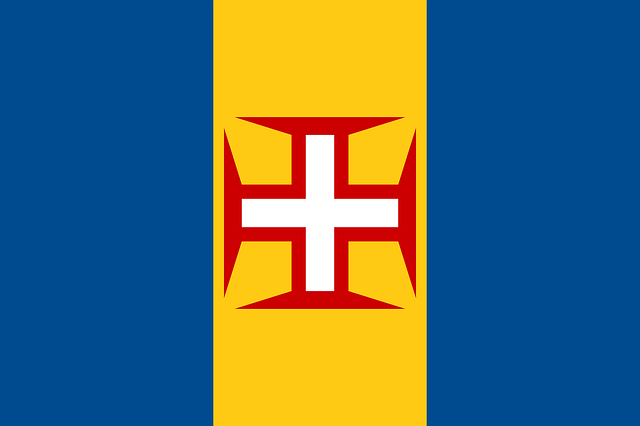

Expanding a business to the global market requires careful selection of the jurisdiction. After all, this determines both the future fiscal burden and the flexibility in conducting business operations and structuring deals. Thus, if you value the stability of the EU and aim for tax optimization, Madeira is an excellent option to consider. This Portuguese autonomous island has developed a distinctive environment for international business, centered around the Madeira International Business Centre (MIBC), which actively draws foreign investors.
The team of AA Lawrange has experience in Madeira company formation and is ready to be your guide, ensuring compliance with all requirements.
In this article, we will cover everything: the benefits of starting a company, licensing features, taxation, and the principles of choosing a bank — we will delve into many issues related to registering your business in the Madeira archipelago.
Benefits of Company Formation in Madeira
When making a decision about incorporation abroad, every entrepreneur weighs all the pros and cons. So what makes Madeira such an attractive spot on the world business map? It’s not just about picturesque landscapes, but very concrete business advantages.
- Preferential tax regime. Within the framework of the MIBC, organizations benefit from one of the lowest corporate tax rates in Europe — 5% on profits derived from operations with non-residents or other MIBC companies (provided certain criteria are met, such as job creation). Importantly, this rate will remain unchanged through 2027.
- Full EU membership. Madeira is part of Portugal and therefore part of the European Union. As a result, companies have legal access to the EU single market, which simplifies trade and strengthens partner confidence.
- Comprehensive stability. Political and economic predictability are crucial for those aiming to establish themselves in a specific jurisdiction and conduct long-term business there. As an autonomous region of Portugal, Madeira offers just such an environment.
- Tax savings. Portugal (and therefore Madeira) has an extensive network of double taxation avoidance agreements — treaties are in place with around 80 countries. This means that profits from international operations are taxed only once (in the country where the company is registered).
- Reputation and transparency. Madeira does not appear on the EU or OECD blacklists of offshore zones. The procedure of company formation in Madeira complies with European standards.
- High-quality infrastructure. Opening an Offshore Company in Madeira is worth considering at least because the island has everything necessary for successful business operations. This includes an international airport, a seaport, modern telecommunications networks, high-speed internet, and access to qualified personnel.
All these advantages together provide a solid image for your business. However, to fully benefit from them, it is important to choose the correct legal form for your future company.
Legal and Regulatory Framework of Company Formation in Madeira
The island of Madeira is an autonomous region of Portugal that is fully subject to national civil legislation, European Union directives, and OECD standards. Therefore, a company registered on the island is not an offshore company in the classical sense. It is considered a full-fledged European legal entity with a high level of credibility and access to all EU regulatory mechanisms.
The main feature of the jurisdiction is the possibility to operate within the MIBC. This is a special regime officially approved by the European Commission, which allows companies to obtain tax incentives provided that established criteria are met.
European Status
Company registration in Madeira grants full Portuguese legal status and a VAT number. This provides access to the EU internal market with the possibility of:
- free movement of capital;
- trading goods and services in all EU countries;
- concluding contracts with European companies under standard conditions.
Thus, companies are full-fledged European legal entities. They are subject to all rights and obligations applicable in Portugal and the EU.
Absence of Currency Control
There are no restrictions in Madeira on profit repatriation or transfers of funds abroad. Therefore, companies are free to:
- open accounts in European banks;
- transfer dividends and profits abroad without limitations;
- receive payments from any countries without additional approvals.
Thanks to this, it becomes significantly easier for a business to cooperate with partners and clients from abroad.
Transparency and Corporate Governance
All information about directors, shareholders, and ultimate beneficial owners (UBOs) is public. This complies with EU AML/CFT requirements and ensures the trust of banks and counterparties.
Substance Requirements
To obtain the 5% tax rate under the MIBC, a company must meet the minimum substance requirements on the island:
- an office in Madeira (owned or leased);
- employment of at least one full-time employee within the first six months;
- investment of at least €75,000 in tangible or intangible assets within two years after company registration in Madeira.
Compliance with these rules guarantees the legitimacy of the preferential regime and meets EU substance standards.
Duration of MIBC Benefits
As of 2026, companies operating under the MIBC are subject to a 5% corporate income tax rate on profits derived from qualifying activities (primarily international operations).
The preferential regime applies to new licenses issued until 2026. Companies that obtain a license may benefit from the regime until 2033.
Network of International Tax Treaties
Companies in Madeira benefit from more than 80 double taxation avoidance agreements signed by Portugal. This allows for the reduction or even elimination of taxes, including on dividends, royalties, and interest. This effectively opens the door to operating with most countries worldwide on favorable terms.
Types of Business Structures for Madeira Company Registration
So, you’ve decided to take advantage of Madeira’s benefits. The next logical step is to determine which legal form of organization best matches the planned scale of operations and ownership structure.
Portuguese legislation, which also applies in Madeira, offers flexible options, each with its own characteristics.
Private Limited Company (LDA – Limited)
If the goal is to establish a small or medium-sized business, or to test a new market niche, this form is most likely the number one choice. LDA is the most widely used type, and with good reason.
| Liability | Limited to the participants’ contributions to the share capital. |
| Participants / Shareholders | At least one participant (founder) is required, who may be either an individual or a legal entity, resident or non-resident. |
| Minimum Share Capital | Symbolic, starting from €1 per participant. However, in practice, it is recommended to contribute slightly more to enhance the company’s commercial credibility. |
| Management | Carried out by one director or several, with no residency requirements. |
Flexibility and simplicity are what make the LDA an ideal option for many scenarios of company formation in Madeira.
Public Limited Company (SA – Sociedade Anônima)
If your ambitions extend further, and you plan to attract significant investments, enter stock markets, or build a large corporate structure, it is worth considering the SA.
| Liability | It is limited only to the value of the shares contributed by the shareholders. |
| Participants / Shareholders | At least 5 shareholders (or one, if it is a subsidiary or a state-owned company). |
| Minimum Share Capital | From €50,000, of which at least 30% must be paid at the time of registration. |
| Management | It provides for the establishment of a Board of Directors and a supervisory (audit) committee, or the appointment of an auditor. |
Thus, the SA is better suited for major players who intend to manage large-scale projects and assets.
Sole Proprietorship (Individual Entrepreneur)
For those who plan to run a business independently, without partners, and do not require complex corporate structures, there is the option of registering as a sole proprietor.
Order a consultation
| Liability | There is no limit. The entrepreneur bears full responsibility for the business’s obligations using all of their personal property. |
| Participants / Shareholders | One participant only (the sole proprietor themselves). |
| Minimum Share Capital | No requirements. The capital is not distinct from the entrepreneur’s personal assets. |
| Management | Carried out directly by the sole proprietor, all decisions are made personally. |
As mentioned, this is the easiest structure to establish and operate, but it involves the highest personal financial risks due to unlimited liability.
A Sole Proprietorship is often considered by freelancers as the first step toward entering the EU market. However, if your goal is registering an IT company in Madeira with the prospect of attracting investment, scaling your team, or participating in large tenders, it is better to choose an LDA. This allows you both to protect your personal assets and to create a strong corporate image for international counterparties.
Sole Proprietorship with Limited Liability (EIRL – Estabelecimento Individual de Responsabilidade Limitada)
EIRL is an interesting hybrid legal form. Why interesting? It’s easy to explain: a sole proprietor is able to limit their liability by allocating a specific portion of assets specifically for conducting business.
| Liability | Limited to the allocated capital (assets specifically designated for the business). |
| Participants / Shareholders | One participant only (the sole proprietor themselves). |
| Minimum Share Capital | The formation of a separate business capital is required; the recommended amount is from €5,000 (contributions may be made both in cash and in kind). |
| Management | Carried out directly by the sole proprietor. |
Thus, EIRL offers better protection of personal assets compared to regular sole proprietorship, while still maintaining sole control.
Branch of a Foreign Entity (Sucursal)
If you already have an active company outside of Portugal and wish to extend your presence to Madeira without establishing a new legal entity, opening a branch would be an ideal option. It is important to understand that a branch is not independent but only has the status of a representative office of the parent structure.
| Liability | Placed on the parent foreign company. |
| Participants / Shareholders | The composition is determined by the parent company. |
| Minimum Share Capital | There is no specific minimum requirement for a branch. The capital is formed in accordance with the financial capabilities of the parent company and legal requirements, for example, for opening a bank account or for tax purposes. |
| Management | Carried out through a designated person who represents the branch in Portugal (according to the decisions of the parent company). |
Selecting the right organizational and legal structure forms the foundation for the company’s operations throughout its entire lifespan. If necessary, our lawyers will help analyze your situation and choose the optimal option for company registration in Madeira.
Madeira Company Registration Requirements
Once the structure is defined, it’s time to move on to Madeira company formation. Nevertheless, successful incorporation depends on adhering to legal requirements, particularly:
- A name that is unique within the territory of Portugal and has confirmation from the National Registry of Legal Entities (RNPC). Both completely made-up names and those with indications of activity are allowed.
- A registered legal address on the island (either a real leased office or a virtual one).
- The presence of at least one director. A pleasant bonus – residency requirements apply, so a foreign citizen can be appointed.
- Depending on the type of company, at least one participant (for LDA) or five shareholders (for SA, with exceptions).
- Share capital (the minimum threshold depends on the type of company).
- Obtaining a Portuguese tax number (Número de Identificação Fiscal, NIF) for all directors, participants/shareholders (individuals and legal entities).
Non-compliance with even one of these requirements means serious problems for the entrepreneur, including a refusal of Madeira company formation. Therefore, it’s important to take the preparatory stage very seriously.
Register a Company in Madeira: Step-by-Step Process
The business legalization process is organized and logical, yet it requires meticulous attention at each step. Let’s consider the typical path for an entrepreneur aiming to register a company in Madeira.
It all starts with a consultation with lawyers. At Lawrange, we will help determine the type of company and develop an action plan. Next, obtaining the NIF (this can be done remotely through a representative) and submitting an application to the National Register of Legal Entities (RNPC) for the issuance of the Certificate of Name Availability (Certificado de Admissibilidade).
The next step is the development of the Articles of Association – the key document that details:
- the management structure;
- rights and obligations of the participants;
- share capital size;
- other important aspects of the business.
In some cases, especially when creating a Public Limited Company (SA), financial preparation may be required even before official registration – opening a temporary bank account to deposit part of the capital.
Afterward, your company needs to be registered both on paper and in the state registry by:
- signing the incorporation documents (either with a notary or using a certified electronic signature);
- submitting them to the Madeira Commercial Registry (Conservatória do Registo Comercial).
This moment officially completes the process of company registration in Madeira, and the company begins its legal existence.
However, immediately after registration, it is necessary to:
- Register the company with the tax authorities and social security (if hiring employees is planned).
- Open a permanent corporate bank account for operational activities.
If you want to go through the process from A to Z without delays, ensure you have professional support. We have experience in such matters, and therefore know how to accelerate the processes.
Documents Required for Company Registration in Madeira
The success of the step-by-step registration process directly depends on the timely and correct preparation of the necessary documentation.
According to standards, the following documents are required:
- Legible copies of passports or identification documents for all directors and founders.
- A document confirming the residence address of each founder and director (e.g., a recent utility bill or bank statement, usually no older than 3 months).
- Copies of NIFs for all involved individuals.
- A Certificate of Name Availability provided by the RNPC.
- The original or a notarized copy of the Articles of Association, signed by the founders or their designated representatives.
- A notarized power of attorney (if registration is done through a representative).
- Completed official forms for submission to the Commercial Registry.
Important! If the founder is another company (foreign or Portuguese), additional registration documents for that company are required:
- registration certificate;
- articles of Association;
- decision on the creation of the subsidiary company.
These must be translated into Portuguese, apostilled, or legalized.
Open a Corporate Bank Account in Madeira
Company registration in Madeira – half of the job. For the newly established business to function fully, it is necessary to open an account in Portugal. Yes, we mentioned this in the section about the step-by-step process of company formation. But now, let’s talk in more detail, specifically about which banks on the island are in demand.
Top Banks for Business Accounts
In Madeira, many banking institutions offer services for corporate clients, including international companies. Among them, the following are considered reliable:
Order a consultation
- Millennium BCP. Has an extensive network, supports modern digital services, works with non-residents.
- New Bank. Created based on Banco Espírito Santo, offers a full range of services for businesses.
- Santander True.Part of the large international Santander group, suitable for firms with global operations.
- BPI Bank. It is one of the major commercial banks in Portugal, known for its stability and focus on corporate clients.
- Caixa Geral de Depósitos (CGD). A state-owned bank, the largest in Portugal, offers services for businesses, especially those registered in the International Business Centre of Madeira (MIBC).
Each bank works with non-residents, but the conditions and document requirements may differ. You will definitely need company registration documents, personal information about directors and beneficial owners, and a description of business activities.
Licenses & Permits in Madeira
After completing the procedure of company registration in Madeira, investors face the obligation to obtain licenses. This is particularly relevant for companies in the following sectors:
- Finance. A license from the Securities Market Commission (CMVM) or the Bank of Portugal is mandatory.
- Tourism. A permit from local health authorities and Turismo de Portugal is required.
- Healthcare. Licenses from the Health Regulation Authority (ERS) are necessary.
- Gambling. A special license from the Gambling Regulation and Inspection Service (SRIJ) is required.
To apply for a preferential corporate tax rate of 5%, a company must have an MIBC license, even if its main activities are not licensed. To obtain this:
- Submit an official application to the Madeira Development Society (Sociedade de Desenvolvimento, SDM) in duplicate – either in Portuguese or English – containing:
- full company name;
- legal address;
- description of activities;
- planned investment amount;
- forecast of the number of jobs to be created;
- relevant economic activity code (NACE).
- Pay €1000 for the application review and €1800 for the annual licensing fee after approval.
- Start operations within 6 months (for services) or 1 year (for industry) from the date of license issuance, otherwise, the license will be canceled.
Obtaining individual permits requires interaction with the municipalities of Madeira, and resolving import/export matters requires communication with customs services.
Confused by the types of licenses and requirements? Contact us for assistance – we will guide you through the bureaucratic maze.
Madeira Company Taxation & Accounting
One of the main driving forces that encourage entrepreneurs to consider company formation in Madeira is undoubtedly the taxation system.
| Tax Type | Standard Regime | MIBC Preferential Regime |
| Corporate income tax | 14.7% | 5% on qualified international income |
| VAT | 22% | 22% (0% / refunds possible for international transactions) |
| Dividend tax | Depends on DTA | 0% (for shareholders not from “tax havens”) |
| Royalty/interest tax | Depends on DTA | 0% (under certain conditions, not for “tax havens”) |
There are also other taxes, such as stamp duty (Imposto do Selo), municipal property tax (IMI), etc.
In addition, all companies are required to prepare and submit financial statements (Balance Sheet, Profit and Loss Statement, etc.) and tax returns annually, in accordance with Portuguese accounting standards (SNC).
To ensure full compliance and reduce risks during inspections, companies operating in Madeira benefit from legal support for tax audits. This includes:
- reviewing and checking financial documentation before submission;
- representation in case of inquiries or inspections by Portuguese tax authorities;
- consultations on the interpretation of tax legislation, especially within the framework of the MIBC preferential regime;
- minimizing potential fines through proactive compliance with requirements.
Interested in such services? Contact the lawyers at Lawrange – we are always ready to help.
Double Taxation Treaties (DTA) with Other Countries
To prevent the situation where the same income is taxed twice – in Madeira and in the recipient’s country of residence, Portugal actively concludes double taxation avoidance agreements. There are about 80 such agreements, including with top countries like the United Kingdom, the United States, China, and Brazil.
Company Registration in Madeira: Cost and Timeframe
Registration of a company in Madeira is a process where the final cost and waiting time depend on specific requests. Some want a small company for freelancing, while others aim for a large IT hub with MIBC benefits. Accordingly, the expenses will differ.
Although there are fixed government fees, the total “turnkey” amount is determined individually. The main influencing factors are:
- Type of legal form. Incorporation of a private company (LDA) usually costs less and proceeds faster than creating a joint-stock company (SA) with its complex statutes.
- Tax regime. If you are applying for the 5% preferential rate within the MIBC, add to your budget the cost of the license application and the annual fee for its maintenance.
- Remote registration. Registration through a representative under a power of attorney requires expenses for legal services, notarization, and apostille of documents in your country.
- Share capital. For an LDA, it is symbolic, whereas an SA requires a significant contribution at the registration stage.
- Additional services. Renting a legal address, services of a certified accountant (mandatory in Portugal), and opening a bank account – all of these are separate items of expenditure.
Do not forget about annual costs for maintaining the company. Even if the business is temporarily inactive, you need to pay the accountant and renew the license.
On average, bringing a company to full operational capacity takes from 4 to 8 weeks. This includes preparing documents and obtaining a NIF (1–2 weeks), registration in the registry (1 week), obtaining the MIBC license (2–4 weeks), and opening a bank account (from 2 weeks to 2 months).
Why You Should Choose Lawrange
Interested in the benefits of Madeira company formation? The team at Lawrange has over 10 years of experience in international incorporation, and the Portuguese jurisdiction is well-known to us.
With our support, the launch of your business will be much faster and easier. We will handle the preparation and submission of documents, communication with registrars and banks, and other formalities. All that’s left for you is the best part – developing your business under the Atlantic sun!
Conclusions
Madeira genuinely distinguishes itself among European jurisdictions. Its status as part of the EU, political stability, impeccable reputation, access to the DTA network, and, most importantly, its attractive tax regime, make the island a popular choice for doing business.
The key to a successful start is choosing the optimal legal structure, opening a bank account, and ensuring ongoing compliance with legislation.
Ready to discuss plans for Madeira company registration? Contact a Lawrange manager!
FAQ
How long does it take to register a company in Madeira?
The entire process usually takes no less than one week, provided that all documents are prepared and there are no delays from the government authorities.
Can foreign nationals or non-residents register a company in Madeira?
Of course, and all that is required from them is to obtain a Portuguese tax identification number (NIF).
Can I open a corporate bank account remotely after registering a company?
Technically, it is possible. However, while some institutions started accepting electronic documents after the pandemic, many still prefer at least one personal meeting with the director or require notarized powers of attorney.
ORDER A MADEIRA COMPANY REGISTRATION
 Telegram bot for quick communication with us