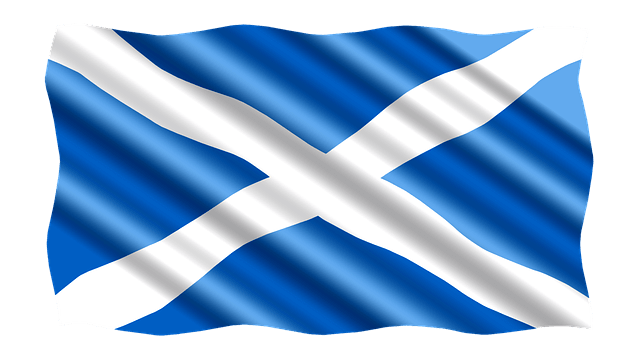

Offshore company in Scotland is an opportunity to enter the international market through one of the best jurisdictions for business. Investment potential, almost unlimited scaling, and a favorable taxation system. Advantages that encourage entrepreneurs to start corporate activities precisely in this country.
If you are also thinking about launching a brand in Scotland, then you may need expert legal guidance and support from specialists like AA Lawrange.
But first, familiarize yourself with the specifics of the Scotland offshore company formation process through the information in the following parts of the material.
Why Set Up an Offshore Company in Scotland
Some choose this region for the high living standards, some for the legal landscape, others for the earning potential. And in fact, all these aspects come together.
When establishing a company in this country, you can count on the following advantages:
- Reputable Jurisdiction trusted far beyond the region.
- No Corporate Taxes, which allows effective profit distribution and directing it towards business development.
- Flexible Corporate Structure, which gives the opportunity to optimize both brand management processes and financial flows.
- Access to European and Global Financial Systems, which improves operational capabilities and areas of business activity.
A high standard of living, good ecology and economy, investment attractiveness. All these go alongside the above-mentioned points, which, by the way, need to be considered in more detail.
Reputable Jurisdiction
Setting up an offshore company in Scotland opens the door to high-level business. The jurisdiction has a reputation valued by many countries around the world due to its strong legal infrastructure and regulatory frameworks. Business in the country allows fast and secure scaling into external markets and regions, providing services to beneficiaries or selling physical or digital goods.
No Corporate Taxes
When income is earned outside Scotland and the UK, SLPs are exempt from corporate taxation. This allows for more efficient financial management, distribution among shareholders, reinvestment, and so on. At the same time, entrepreneurs are still obliged to comply with transparency requirements and declare income according to the rules of their jurisdictions.
Flexible Corporate Structure
Physical and legal persons in the management structure, no requirements regarding minimum capital, local directors, etc. A convenient LLC form allows creating and administering a business remotely, gaining all the benefits of owning a company in Scotland with minimal costs and risks. Holdings, startups, IT companies, and many other corporate formats can work effectively in this jurisdiction.
Access to European and Global Financial Systems
Scotland offshore company formation allows working with leading banks at European and global levels. Crypto startups, traditional FinTech companies, or any other business receive an almost unlimited scaling potential.
And these are only some of the advantages, but there are also many specific features of operating in this jurisdiction.
Key Features of Offshore Company Formation in Scotland
The advantages of the jurisdiction are hard to hide since the country is globally known for its clean legal landscape, economic, and political stability. Besides what has been mentioned, it is worth focusing more on its additional features, namely:
- Legal Structure: Scottish Limited Partnership (SLP), which opens almost unlimited operational opportunities for entrepreneurs.
- No Minimum Capital Requirements, so the entry threshold into the business segment here is relatively low compared to similar jurisdictions.
- No Residency Requirements for Partners, meaning absolute freedom in organizing corporate activities.
- Limited Reporting Obligations, which allow freer construction of corporate and financial processes.
Looks promising, doesn’t it?
Legal Structure: Scottish Limited Partnership (SLP)
A Scotland offshore company can be formed with an SLP structure, which combines the advantages of traditional and limited partnerships. This structure mandates the presence of at least one general partner and one limited partner. Moreover, the latter is not liable for the company’s debts, thereby removing a significant part of financial and reputational risks.
Also interesting is the taxation system for such participants since they pay income taxes in their home jurisdictions.
No Minimum Capital Requirements
Not having capital is not a valid reason to give up on starting a business. At least not in Scotland. Yes, commissions, fees, etc. still remain, but the lack of minimum capital requirements significantly simplifies the process of entering the market. Especially for bold startups, IT companies, and simply enthusiasts who have innovative ideas and are looking for investments.
By the way, registration in the Scottish jurisdiction significantly increases the chances of attracting substantial investment.
No Residency Requirements for Partners
An offshore company in Scotland, particularly in the SLP format, can be founded even by foreigners. The legislation does not require at least one of the partners to have local resident status. This greatly simplifies the process of establishing a company and expands the administrative capabilities of the enterprise.
It is also not necessary to physically manage the business or be personally present. It is sufficient to appoint an authorized person who will act as the entrepreneur’s representative in the jurisdiction. For example, one of the experts from AA Lawrange, who live and work in Scotland and thoroughly know the local legislation.
Limited Reporting Obligations
Offshore companies have simplified reporting requirements. There is no need to submit annual financial reports if the enterprise does not operate in the local market or the UK market.
No taxes are applied to reports of international activities, nor are they subject to oversight. Income declaration from it also occurs in a somewhat atypical way. The declaration is submitted in the home jurisdiction, not in the country of company registration.
Quite lenient conditions, aren’t they?
Bank Account Options for Scottish LPs
Optionally, you can open an account in England and Scotland for offshore company formation in Scotland. Although this is not a requirement, working with local financial providers has several advantages compared to an account elsewhere. For example, with a local bank you get:
- No problems carrying out all types of activities allowed by law.
- Access to SWIFT, SEPA, and other payment platforms and infrastructures legalized by the jurisdiction and international law.
- The ability to perform multi-currency operations, quickly convert currency, automatically distribute it among accounts, and so on.
Note that depending on the company type, you can choose either traditional banking for operations or more modern FinTech solutions, neo-banking, etc. The main thing is that the institution is licensed to operate in the country and complies with KYC/AML/CFT requirements.
The latter also applies to the owner of the enterprise, their partners, since these persons are also subject to periodic financial monitoring.
Order a consultation
Activities of Offshore Companies in Scotland
Offshore companies can engage in a wide variety of activities. From ordinary international trade to providing services in various segments. However, most often SLPs of the following types are registered here:
- International trade, which can cover practically all markets of the world. Preference is given to regions with which Scotland has economic agreements.
- IT and consulting services are delivered to clients across the majority of countries globally. Limitations apply exclusively to high-risk regions and individuals or entities under international sanctions.
- Asset management of both individual clients and individuals, as well as companies, corporations, etc. In particular, in the format of FinTech solution providers, and so on.
- Investing, both directly of own funds and in the format of crowdfunding organizations, platforms, and other safe types of enterprises in this niche.
- Holding activities focused on own or partner enterprises, conglomerates, corporations, subsidiaries, etc.
Formally, it is possible to engage in anything. In order to retain offshore status, operations need to be aimed at foreign markets and meet the jurisdiction’s legal standards.
Legal and Compliance Considerations
Due to the fairly rigorous legal landscape, entrepreneurs need to comply rigorously with all legal obligations, covering international as well as local laws. This means:
- Legalization and registration of the company in the domestic market in a format that corresponds to the enterprise’s activity, its structure, and ownership form.
- Reporting on beneficiaries (PSC register) in the established form, deadlines, and completeness of submitted information.
- Undergoing AML procedures, complying with KYC/CFT policies, and timely notification of regulators and relevant authorities about detected suspicious schemes or even individual cases.
Despite limited reporting requirements, companies are still governed by local legislation. Therefore, activities that could be interpreted as tax evasion, money laundering, etc., should be avoided.
If you want to ensure that operations fully comply with defined requirements, it is advisable to hire experienced lawyers from AA Lawrange for legal support of the enterprise. These services will also be needed for other purposes.
Taxation of SLPs in Scotland
Scotland offshore company formation in the SLP format exempts from taxation. However, only in the following cases:
- If all business activities take place outside Scotland and the rest of the United Kingdom.
- If the company has no resident partners (especially in the highest roles in the management structure).
- If the business is registered correctly and complies with the legislation requirements regarding offshore activity.
And although compliance with CRS/FATCA provisions is still mandatory, direct taxation of income occurs exclusively in the “home” jurisdictions of the business owners.
Stages of offshore registration in Scotland
Despite the UK’s stringent legal environment, the process of business registration remains accessible and simple for international entrepreneurs. The formation stages include:
- Selection of partners along with the development of incorporation documents.
- Filing documents with the Companies House registry.
- Obtaining the certificate of registration.
- Opening a bank account (if necessary).
Since there are no residency requirements for members of the management here, the incorporation of the company can be carried out by any authorized person, including an agent or a specialist from AA Lawrange. The main thing is to provide them with a full package of documents required by local regulators and registrars.
Required Documents for Offshore Registration in Scotland
To create a Scotland offshore company, it is necessary to prepare a number of documents defined by the requirements for new enterprises operating in the jurisdiction or under its patronage. Specifically, this refers to the following documentation:
- Copies of passports of all partners.
- Evidence of residential address, such as a utility bill or bank statement.
- Information about the ownership structure and beneficiaries.
- Power of attorney or consent for registration (if a proxy handles this process).
- Description of the company’s activities (in some cases).
- Information may also be required to pass KYC/AML checks. All documents must be submitted in English or include a notarized translation.
Remember that any issues with documentation, its format, and accuracy can lead to problems such as delays in the offshore company formation process or even refusal of licensing. Therefore, it is better to use the help of experts who will prepare the entire list of documents necessary for company registration, including in the form of an SLP.
Why You Should Choose Lawrange
Lawrange company is your reliable partner in registering offshore companies in Scotland with a clear focus on results, confidentiality, and legality. We focus on setting up Scottish Limited Partnerships (SLP) with guaranteed compliance to UK laws and international regulations.
Lawrange provides:
- Full support at all stages of registration: from document preparation to opening a bank account.
- Individual solutions taking into account your tax, financial, and strategic goals.
- Consultations on compliance issues, beneficiary protection, and risk minimization.
- Professional turnkey company formation in the shortest possible time.
- Support after registration: accounting services, reporting, legal support.
With Lawrange, you get not just a company, but a working tool for international business created in accordance with the requirements of the relevant legislation. We will help you take advantage of all the benefits of the Scottish jurisdiction without unnecessary hassle.
Conclusions
An offshore company in Scotland is one of the best options if you are interested specifically in international activities under the patronage of a loyal jurisdiction. Simplified requirements, a high level of reputation, remote administration, almost unlimited scaling potential.
Ready to establish your business here? Use the help of AA Lawrange to quickly and reliably launch your enterprise!
FAQ
How much does it cost to register a Scottish offshore company?
The cost starts from £250–£400, depending on the services and the agent. A comprehensive package that includes banking support might be more expensive.
Can I open a bank account for my Scottish LP?
It is advisable to open a local account before offshore company formation in Scotland. This is quite simple if you are assisted by experts from AA Lawrange.
Can I use a Scottish LP for international business?
Yes, SLP is ideal for international trade, consulting, IT, investing, and other cross-border operations.
Is financial reporting required for an SLP?
Scotland offshore company formation does not require mandatory financial reporting if you do not conduct activities in the domestic market.
ORDER AN OFFSHORE COMPANY FORMATION IN SCOTLAND
 Telegram bot for quick communication with us