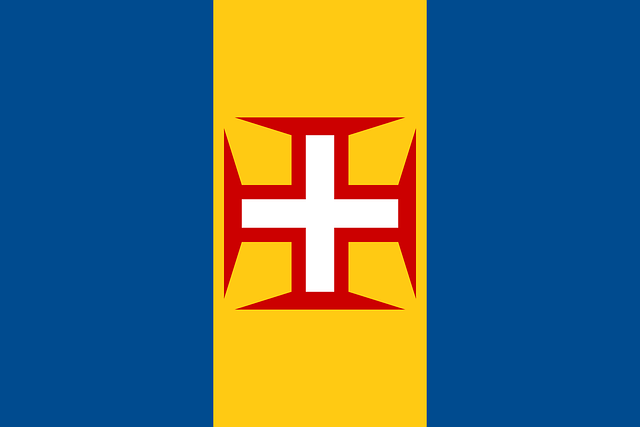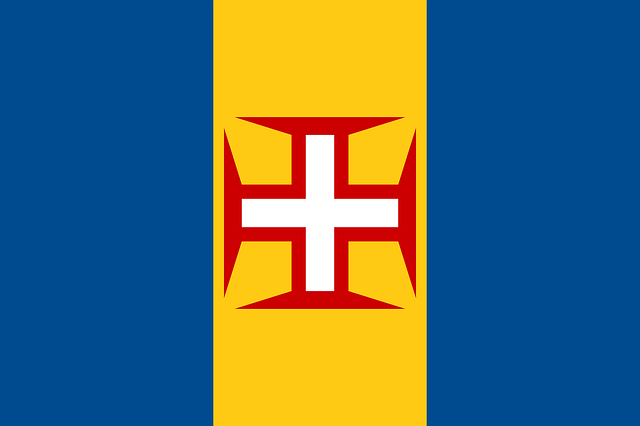

Madeira is an island with a pleasant climate, stunning beaches, and a rich cultural history linked to Portugal. It is also known as a world-class company registration location with a friendly business environment and an efficient legal system. Opening an offshore company in Madeira has been significantly simplified thanks to reforms in mainland Portugal and Madeira’s status as a special economic zone. Back in 1987, the European Commission first approved the island’s low-tax regime. That was when Portugal joined the European Community. By introducing a zero corporate tax rate, the country sought to attract investors to its isolated island. Since then, companies registered in the Madeira International Business Centre have benefited from the low taxes approved by the European Commission.
The company registration process in Madeira for both EU and non-EU residents has its own unique requirements. By completing a few key steps, you can open an offshore company in Madeira and gain access to the potential benefits of this jurisdiction. The most important thing is to ensure you have professional legal support to avoid potential mistakes and delays in the registration process. Lawrange Attorneys Association is ready to provide a comprehensive range of services necessary for successfully registering an offshore company in Madeira. With us, you can complete this process quickly, without unnecessary costs or stress.
Advantages of Company Registration in Madeira, Portugal
Opening an offshore company in Madeira offers a number of significant advantages that are particularly attractive for businesses.
Tax Incentives
The standard corporate tax rate for a local Portuguese company registered in the Autonomous Region of Madeira is only 14.7% (compared to 21% in mainland Portugal). This makes the island the most tax-friendly location in Portugal for business and investment. The Madeira International Business Centre (MIBC) also operates here, offering a special tax regime in the form of attractive incentives for companies in certain sectors. MIBC offers a reduced corporate tax rate of 5%, as well as dividend and capital gains exemptions, subject to economic substance requirements.
Simple Business Registration Process
In recent years, Madeira has simplified its company registration process, encouraging many foreign businesses to open representative offices in this jurisdiction. Offshore company registration in Madeira can be completed in just a few weeks, once documents are accepted and verified by the relevant authorities.
Access to the European Union Market
Portugal’s status as an autonomous region gives Madeira access to the vast European market. This registering a company in Europe allows for the free trade of goods and services within the EU, fully utilizing the benefits of the single market economy.
Strategically Advantageous Location
While Madeira is an administrative unit within Portugal (and therefore has close ties with the rest of Europe), it is also located in proximity to continental Africa. This makes it an attractive location for companies seeking to develop these markets.
Skilled Workforce
Madeira boasts a highly skilled and multilingual workforce, providing companies with a vast talent pool in a variety of fields. Madeira also boasts several universities and vocational schools, ensuring a constant supply of qualified personnel to meet the needs of local and international businesses.
Modern Infrastructure
The island boasts a well-developed infrastructure, including a reliable telecommunications network, public transportation, and modern medical facilities. Madeira’s popularity as a tourist destination has also led to investment in accommodation, entertainment, and leisure facilities.
Legal Status and Regulatory Features of Companies in Madeira
To open an offshore company in Madeira, you must comply with the Portuguese Companies Code. The jurisdiction is part of the European Union, so companies registered here are not considered “offshore” in the traditional sense, but rather Portuguese companies with certain tax benefits provided for in Article 299 of the Treaty establishing the EU. Business registration in Madeira is regulated by the Commercial Companies Code, meaning that the same rules apply to those wishing to register on the island as in mainland Portugal.
Legal Forms and Types of Companies
Business registration in Madeira , including by non-residents, is possible using several types of legal entities. Legal entities are registered in accordance with Portuguese law and can obtain a license to operate through the Madeira International Business Centre (MIBC) to take advantage of tax benefits.
Sociedade por Quotas (similar to an LLC)
Private Limited Liability Company. The most popular option for establishing small and medium-sized businesses, including foreign ones. An LLC can be opened by at least one participant/shareholder (resident or non-resident, individual or legal entity). The starting capital can range from €1 to €2,000. The liability of the company’s participants is limited to the amount of the contributed capital.
Anonymous Sociedade Anónima (Joint Stock Company)
A public limited company in Madeira is suitable for setting up a large business. A minimum of five shareholders (who may be non-residents) are permitted to establish an SA, although under certain conditions, a single shareholder is permitted under the MIBC. The minimum share capital is €50,000. The company is managed by a board of directors.
Holding Companies and Branches
A holding company must have the legal form of an Lda. or S.A. The sole purpose of creating such a structure is to manage shares/participations in other companies. Branches are not separate legal entities, but rather extensions of a parent company registered outside of Madeira. There are no minimum capital requirements for opening them. They can benefit from the tax benefits of the MIBC if they have the appropriate license.
Offshore Company Registration Process in Madeira
Incorporating an offshore company in Madeira requires successfully completing several steps, each of which requires careful planning.
Choosing a Name
You must choose a unique name that complies with Portuguese law. It must reflect the company’s legal form (e.g., LDA or SA). The use of certain words, such as “bank,” “investment fund,” or “guarantee,” is permitted only with special permission. To verify and reserve your company name, submit an application to the Commercial Registry (Conservatória do Registo Comercial). The reservation is valid for three months.
Defining the Types of Activities
Your activities must comply with the Portuguese Classification of Economic Activities (CAE). This classification is crucial for tax registration and regulatory compliance.
Preparing the Required Documents
Document requirements may vary depending on the company structure. Typically, the documentation package includes:
- Company Articles of Association, which describe the structure, objectives, and management of the company.
- Identification documents of the management team – copies of passports and, in some cases, a certificate of good conduct for foreign investors.
- Confirmation of name reservation from the registry.
- Application for company registration.
- Proof of the company’s address (e.g., a lease agreement).
- A director’s statement of acceptance of duties.
Submitting an Application and Obtaining a Certificate of Registration
Documents and the application can be submitted to the Madeira Commercial Registry in person or online through the “Empresa Online” system. A registration fee is charged, the amount of which depends on the company’s legal form. If your application is approved, the Regulator issues a Commercial Registry Certificate (Certidão de Registo Comercial), confirming the company’s legal status in Madeira.
Requirements for Opening a Company in Madeira
Only organizations that have created jobs (at least one employee) within the first six months are eligible for the preferential tax regime. Employees must be residents of Madeira, regardless of citizenship.
Other requirements:
- Companies in Madeira must have both a registered local office and a local agent for the preparation of documents.
- Accounting and financial reporting are mandatory.
- The director must be a resident.
- A clear economic structure, risk management strategy, assets, and functions appropriate to the type of activity must be present. Directors are specified in the company’s articles of association, who are elected or removed at the annual general meeting of shareholders.
- An auditor is also elected at the annual general meeting of shareholders. Both the auditor and directors are responsible for the annual submission of tax and audit information in accordance with the requirements of the Madeira government.
- Annual tax returns are submitted to the local tax authorities, even in cases where there are no outstanding taxes and no business activity is being conducted.
Taxation, Incentives, and Reporting in Madeira
The Madeira International Business Centre offers a reduced corporate tax rate of 5%, compared to the 21% rate in the mainland. Furthermore, companies registered here enjoy tax incentives on dividends, shareholder distributions, and other financial transactions. Protection against double taxation is provided by Portugal’s extensive network of tax treaties with other countries (almost 80). Madeira’s tax reporting follows standard Portuguese rules:
- The tax year follows the calendar year, but in some cases may be shorter.
- Companies must hold an annual meeting and file financial statements by March 31st.
- Audits are mandatory for public companies. Private companies are required to undergo an audit if their assets exceed €700,000, their turnover exceeds €1,400,000, or their employee count exceeds 50.
- Financial statements must comply with international standards and be prepared by December 31st of the following year.
- Tax returns are filed within five months of the end of the tax year.
Opening a Corporate Bank Account in Portugal
Opening a bank account for a non-resident company in Madeira has a number of specific requirements related to both local and international financial regulations. The process is generally standardized, but requires careful document preparation and compliance procedures. Key features of opening an account:
- Strict adherence to AML regulations, requiring non-residents to provide a large amount of information and documents to confirm the identity of beneficial owners and the legal origin of funds.
- Physical presence required – although some banks offer the option of remote account opening via power of attorney or video identification, many prefer the in-person presence of applicants (managers, directors) at a bank branch in Madeira or mainland Portugal.
- Required documentation – before opening a bank account in Portugal , you must prepare the incorporation documents, passports and proof of residence of all directors, managers, and ultimate beneficiaries, owners, tax identification numbers, a business plan, and proof of the legal origin of funds.
- Significant compliance deadlines – the bank thoroughly reviews all submitted documents, ranging from several weeks to several months, especially for complex international structures or companies from high-risk jurisdictions.
Madeira has a presence among both major Portuguese banks (such as Millennium BCP, Novo Banco, and Banco Santander Totta) and specialized international financial institutions. Larger banks generally have conservative policies when working with non-residents, while some private or specialized banks may offer flexible terms but with higher fees.
Order a consultation
Main Risks and Restrictions of Opening an Offshore Company in Madeira
Registering an offshore company in Madeira is subject to a number of strict requirements for conducting real economic activity (economic substance) and certain tax restrictions aimed at preventing abuse.
The main restrictions and risks are:
- Substance requirements – to receive tax incentives (for example, a 5% corporate tax rate until 2028), a company must meet a number of conditions, including hiring at least one resident during the first six months of operation, investing a minimum of €75,000 (tangible or intangible assets) during the first two years of operation (however, this requirement is waived for creating six or more jobs), and maintaining a real presence, including operational infrastructure and actual activities on the island.
- Tax incentives are limited to certain annual maximum amounts, which depend on the number of employees and the volume of business – this limitation is aimed at preventing overuse of the regime. There are also absolute limits on taxable profits depending on the number of employees.
- Reputational risks and perceptions – although Madeira is not on any OECD or EU blacklists and fully complies with international transparency standards, it may still be perceived in the business world as an “offshore jurisdiction,” which sometimes attracts increased scrutiny from banks or tax authorities in other countries.
- Strict financial reporting and auditing – companies are required to maintain full accounting records in accordance with international standards (IAS/IFRS), submit an annual tax return, and monthly VAT and social security reports. An audit is mandatory if the company exceeds certain financial targets.
- Legal changes – the IBCM tax regime is approved by the EU only until the end of 2028. Even with expected further extensions, the risk of changes to the legislation or the terms of the benefits under pressure from European regulators cannot be ruled out.
Thus, a Madeira company is not an “offshore” in the classic sense, but a jurisdiction with a special reduced tax regime that requires genuine economic activity and transparency.
Cost and Timeframe for Offshore Company Registration in Madeira
The process of registering a Madeira company typically takes from 4 weeks to 2-4 months. The exact timeframe depends on:
- The accuracy of the prepared documentation.
- The duration of bank and legal checks.
One-time costs include contributing the share capital, the amount of which depends on the chosen legal form. For example, for limited liability companies (LDAs), the minimum share capital may be as little as 1 euro, while for joint-stock companies (SAs), the amount is higher.
Another significant part of the initial costs is legal assistance – prices depend on the service package provided. For example, full support, assistance with opening an account, and obtaining an IBCM license are more expensive. Government fees and notary fees are also included in the cost of registering an offshore company in Madeira. Their amount depends on the specific company structure.
Professional Legal Support from Lawrange
Lawrange Attorneys Association provides professional legal support to those wishing to register an offshore company in Madeira. We offer a full range of business services, from detailed consultations on choosing a legal form and document preparation to representing your interests in dealing with the Regulator. Working with us will help you successfully register a company in Madeira with access to all the benefits, ultimately ensuring sustainable business growth in Portugal’s dynamic business environment. Our firm has extensive experience in international corporate law and tax planning, which we fully utilize throughout the registration process, ensuring compliance with all necessary requirements.
FAQ
Are companies required to comply with the economic substance requirement in Madeira?
Yes, if your company expects to take advantage of the 5% corporate tax rate and other benefits.
Can you manage a company in Madeira remotely?
Yes, but with significant restrictions. Directors are permitted to participate in meetings and operational activities remotely using modern communication tools. However, when making critical decisions, the board of directors must meet in Madeira.
What are the consequences of not having a real economic presence on the island?
This can lead to the loss of tax benefits, recognition as a resident of another country with all the attendant tax liabilities, and significant fines from Portuguese regulators.
ORDER AN OFFSHORE COMPANY REGISTRATION IN MADEIRA
 Telegram bot for quick communication with us