
Imperfections, restrictions and constant changes in legislation force businesses to look for ways to reduce the tax burden and facilitate entrepreneurial activity. For this reason, more and more often entrepreneurs decide to open an offshore company – a legal entity which, thanks to registration in a jurisdiction with the most favorable business conditions, significantly increases the chances of successful development of their own business. There are other tasks that offshore companies allow to solve. These include reducing corporate tax, simplifying financial reporting, and maintaining full confidentiality of owners and shareholders.
The solution of any tax and registration tasks must necessarily occur in cooperation with qualified specialists. You can take advantage of the help of real professionals by contacting the Lawrange Lawyers Association. We are familiar with all the nuances, peculiarities and difficulties that may face the registration of offshore. Book a free initial consultation to determine your goals, objectives and preferences in the choice of jurisdictions. This will help you understand what action plan to take and what you can expect during the registration process.
Concept of an offshore company
An offshore firm is a firm that is incorporated in a country with favorable corporate laws that provide for the possibility of:
- Filing and maintaining accounting reports in a simplified mode.
- Pay low or no taxes of certain types.
- Freely operate a business anywhere on the planet.
- Maintain the confidentiality of all owner-related information.
- Use of nominal service.
The creation of favorable conditions for business is explained by the desire of offshore governments to attract as much investment as possible into the local economy.
The establishment of a company in an offshore jurisdiction is often associated with illegal activities, money laundering and other methods of fraud. However, a firm in an offshore jurisdiction is not itself something illegal, provided that its owner conducts business exclusively within the framework of local legislation. That is, the offshore acts as a kind of legal status, the quality of which, if I may say so, depends on the laws of the country. For this reason, it is extremely important to be able to choose the right jurisdiction for registration of the company – its status in international markets depends on it. The more prestigious the offshore jurisdiction, the less chance you have of encountering all sorts of risks.
Today, regulators of various countries are trying to limit as much as possible the ability of offshore zones to reduce taxes, in parallel obliging them to transfer information about beneficiaries and assets. However, these attempts so far do not prevent offshore zones from freely and legally using nominees in their work, protecting themselves and their business from prosecution by foreign courts. Moreover, a number of offshore companies have the status of a trustworthy zone, thanks to which global banks cooperate with companies registered on their territory. Regulators apply less stringent requirements and norms to trustworthy offshore companies than to firms blacklisted by FATF and OECD international supervisory organizations.
Importantly, the legitimacy of many offshore jurisdictions is due to their adoption of generally accepted rules of transparency, reporting and collection of information on beneficiaries. But this does not mean that every such offshore jurisdiction has open registers.
Types of offshore companies
Based on the method of taxation, offshore entities are:
- Classic – foreign investors are not subject to corporate tax. Companies need to pay a one-time fee once a year.
- With territorial taxation – tax is paid to the local treasury on profits earned exclusively in the offshore jurisdiction.
- With zero tax for certain types of business – typical for some European offshore countries, e.g. Latvia, Bulgaria.
- With low stakes.
Depending on the peculiarities of the registration procedure, offshore is called:
- Free – minimum requirements, an application and notarized copies of the client’s documents are sufficient.
- Formal – in addition to the above documents, additional information from the applicant’s country of residence may be required.
Also, offshore zones come in open, moderately open and closed registry.
The advantages and disadvantages of offshore companies
If you register an offshore company, you can get access to significant advantages. The main thing is to make the right choice of jurisdiction. Otherwise, there is a high chance of encountering problems when conducting offshore business. Specialists of AA Lawrange will help you not only to choose the most suitable offshore for your business, but also to thoroughly understand all the nuances of local legislation.
Main advantages of offshore registration
Registering an offshore company is preferred for the following reasons:
- Opportunity to reduce fiscal disbursements.
- Convenient and easy creation of an international holding company.
- Significantly simplified financial and tax reporting.
- Opportunity to cooperate with major foreign banks.
- Virtually eliminating the risk of loss of funds by spreading assets across different countries.
- Limited or completely closed access to information about owners, shareholders, etc.
- Protection from raiding is an extremely valuable advantage for entrepreneurs from countries with high levels of corruption.
- A wider range of opportunities that can be utilized to expand the business.
- Offshore jurisdiction government support for business.
- Savings on foreign cash flow management due to the absence of currency control.
Also an important advantage of offshore countries is a faster and more simplified registration procedure. Many offshore countries offer investors the opportunity to obtain citizenship in an accelerated procedure. As a rule, a special fee is paid and the fact of having a sufficient amount of money in a personal account opened in a local bank is confirmed.
Main disadvantages of doing business offshore
- Distrust on the part of partners and banks, which can make it quite difficult for companies, especially large ones, to make purchases solely by prepayment. Operating in some offshore countries (usually blacklisted), it can be problematic for companies to make international money transfers.
- Financial and legal risks – additional taxation by the offshore state in the territory of which the company with which the offshore company wants to establish cooperation is registered is quite common. In the case of actual presence of a legal entity in the offshore country, administrative or criminal liability is possible.
- Low level of reliability – at any moment even an ultra-reliable offshore jurisdiction may change its legislation, and already registered foreign companies will have to share information about tax residents with regulators in other countries.
In addition, there are periodically world-class scandals related to the leakage of data on offshore activities of various influential persons and large investors – another very real disadvantage.
Best jurisdictions for offshore registration
The most attractive offshore jurisdictions are characterized by the presence of:
- Loyal tax policy – low rates, various benefits, double taxation treaties, etc.
- Prestigious status, as evidenced, for example, by not being blacklisted.
- A steadily growing, robust economy.
- Nominal Service.
- Developed banking system.
- A stable political environment.
All these and other factors are worth considering when choosing an offshore jurisdiction.
British Virgin Islands (BVI)
One of the most prestigious classic offshore jurisdictions, where high standards are observed during the opening and subsequent operation of a company. Here you will definitely be able to optimize taxes without damaging the reputation of the business.
The main features of the BVI:
- Having the status of independence, the jurisdiction is still guided by the opinion of the UK Parliament in making most decisions.
- The state consists of many islands in the Caribbean, so it is not only a favorable place to open a company, but also to combine work with vacation.
- The official currency is the American dollar, which makes it much easier to make most international payments.
Company registration in the British Virgin Islands is characterized by simplicity – the application is considered within 2-3 working days. This jurisdiction provides for the maintenance of primary accounting records, in case of its absence, the director will face administrative liability. In addition, here:
- There are no taxes on profits earned outside the BVI.
- License fees are payable upon registration (and also if the company needs to be renewed).
- A priority for the Virgin Islands government is to maintain the confidentiality of offshore companies, despite attempts by global regulators to change that.
If an offshore company is registered in the British Virgin Islands, it will not be possible to cooperate with American firms, because the U.S. does not recognize the legality of this territory.
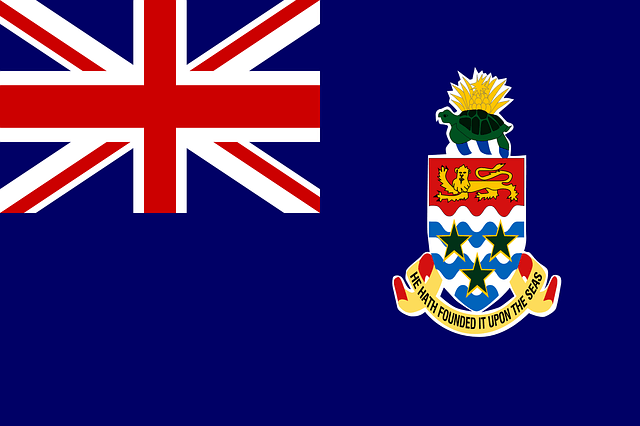
Caymans
The Cayman Islands were once a colony of the British Empire and are now an overseas territory. Today, they are called a “tax haven” due to the lack of income tax and the ability to easily incorporate a company. The government of this jurisdiction operates within the framework of international tax rules, thanks to which the Caymans are still not included in any “black” list of offshore companies in the world. Other important features and advantages of starting a business here:
Order a consultation
- Ability to store corporate documents anywhere on the planet.
- No requirement to hold an annual shareholders’ meeting and no audit.
- Closed access to the Register of Directors and Officers.
- No need to pay initial capital.
- The same individual or legal entity may act as a director and shareholder.
Registering a company in the Caymans gives foreign entrepreneurs access to skilled labor, a modern banking system, developed infrastructure and logistics routes.
Costa Rica
The most politically and economically stable country in South America. Taxation here works on the principle of territoriality, that is, taxes are paid only on profits earned in Costa Rica. The most common organizational and legal forms are LLC and Joint Stock Company. Registration of a company in Costa Rica is considered a favorable decision for a number of reasons:
- Shareholders and management can be of any nationality.
- There is no fixed starting capital, the main thing is to pay at least a quarter of the required amount when registering.
- Only tax returns are required to be filed annually.
- It is possible to open an account in EU banks.
- From the time of application, the registration process takes no more than 1 month.
- Companies are subject to zero capital tax when located in Costa Rica’s Special Trade Zones.
Plus, employers have the opportunity to hire highly qualified staff who are fluent in Spanish and English.
Mauritius
This jurisdiction is considered a reliable international center of financial services. In Mauritius it is possible not only to register a classic offshore company, but also an onshore company. In the first case, choose the organizational-legal form of GBC II, which makes it possible to receive profits only outside the country. If you decide to register an onshore company here, then register GBC I – business activities with this legal form can be carried out in Mauritius and outside the country.
This non-European jurisdiction has an IBAN banking system, which together with the 3% income tax is considered to be the main advantage of registering a company here. The government of Mauritius has concluded many agreements on avoidance of double taxation. Quite often all sorts of startup projects pay attention to this offshore.
Belize
The country is among the financially stable offshore countries. But it is attracted mainly by the complete absence of taxation in respect of multinational companies and carefully considered laws that facilitate comfortable business. There are other reasons why registering a company in Belize will prove to be an extremely profitable solution:
- Quick registration (about 1 week).
- The amount of the starting capital is not limited in any way.
- Closed Registers with information on owners and shareholders.
- Ability to hire nominee directors.
- You do not need to report to the IRS on a regular basis (but you should keep records).
- Lack of currency control.
However, it is important to know that companies are taxed when cooperating with local residents. In addition, some activities require a license (e.g. insurance, banking sector).
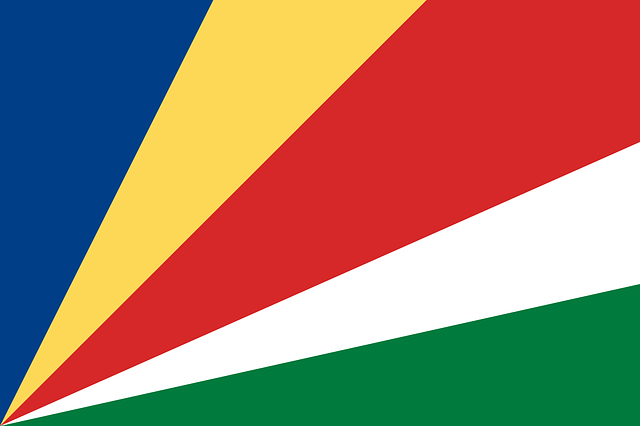
Seychelles
It is a classic offshore that is characterized by:
- The ability to maintain confidentiality.
- No minimum starting capital requirements.
- Simplified company registration scheme.
- The presence of a flexible system of firm management.
- Lack of currency control.
- Quick registration procedure – registration of a legal entity from the moment of submission of all documents takes about 5 days.
But the most important thing is that any company in Seychelles will be able to work freely with partners of other countries, as this jurisdiction is included in the “white” list of offshore.
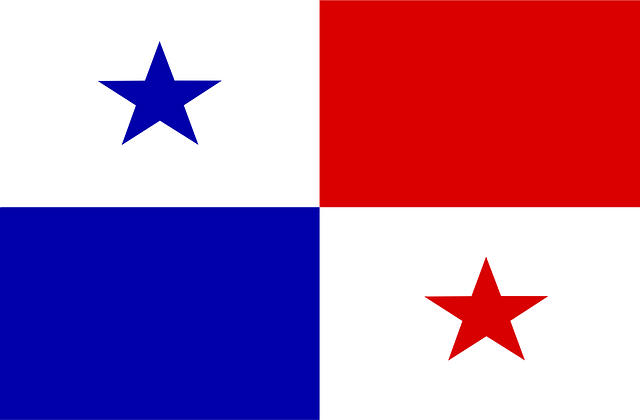
Panama
The country is among the best offshore jurisdictions in Latin America for foreigners. A steadily growing GDP, well-developed corporate law and a multifunctional banking system make it as easy as possible to open and then run a business. Company registration in Panama takes no more than 3-5 days. At the same time, the main advantages of opening a company are:
- Lack of currency control.
- Taxation only on income earned in Panama.
- Minimal tax reporting requirements.
- No residency requirements for the owner, shareholders or directors.
Panama also has well-designed e-commerce legislation, making privacy protection in this offshore more effective than in many other countries.
List of documents for offshore registration
The composition of the documentation package depends on the requirements of the Regulator of a particular jurisdiction. However, as practice shows, it is possible to identify a general list of documents characteristic of offshore companies:
- Civil or foreign passport of the beneficiary or the person representing his/her interests.
- A document that will serve as proof of the owner’s or attorney’s residential address (such as a utility bill).
- Copies of the documents listed above.
- A brief description of the business in free form.
Registration of a company in an offshore zone often implies the need to provide a legal address, but some offshore zones additionally require proof of the actual address. Documentation must usually be submitted with a notarized translation.
Peculiarities of legal services for offshore companies
Effective operation of a firm offshore is only possible with skilled service which includes:
- Providing a legal address – a business does not always need a physical office to start up, but it is required by law in any offshore jurisdiction to have a legal address.
- The services of a special registration agent engaged in providing nominal service. For example, his duties include, among other things, signing contracts, issued invoices, commercial documentation. In this case, the data of the owner are not specified. The representative cannot be a resident of the country in which the offshore company directly operates, since the owners will be obliged to pay income tax.
- Payment of regular fixed fees and state fees, including company renewal fees.
- Accounting, preparation of reports and their filing with the tax authorities (for offshore jurisdictions where this is mandatory).
Legal service of offshore companies is one of the priority activities of our law firm. We are able to ensure stable operation of your business abroad.
How an offshore company is registered
Each jurisdiction regulates this process by relevant laws, within the framework of which various requirements, conditions, time limits and other aspects are set. In general, registration in an offshore country is much easier and faster than in other states.
Conditional procedure for registration of an offshore company:
- Choosing a jurisdiction – the easiest way to do this is to work with a qualified Lawrange specialist, who will suggest offshore jurisdictions with the most appropriate corporate law and tax policy based on the specifics of your business.
- Choice of Legal form – the chosen form of business depends on the requirements imposed by the local Regulator and the package of necessary documents.
- Preparation and submission of documentation – most offshore zones provide for the possibility to submit the necessary documents remotely. The specialists of our Law Firm will also help to cope with this stage.
- Opening a bank account – how complicated this process is depends on where the company is registered, its type and type of activity. Once the account is opened, start-up capital must be paid (if required by local law).
- Payment of state fees – financial costs are directly related to the type of offshore and the planned business activity.
Ready-made offshore companies
Registration of a company in an offshore zone cannot always take place quickly. To save considerable time, it is possible to buy a ready-made company in the jurisdiction of interest. This solution has a number of advantages:
- It takes no more than 2 days to complete the documentation, while registration of a classic offshore takes 1-2 weeks on average.
- Ability to enter company data into contracts, invoices immediately after the purchase is made.
- Faster account opening in the bank due to already prepared corporate documents certified by a notary.
Our specialists will help you choose a jurisdiction. We will organize the process of preparation and execution of the sale/purchase transaction strictly within the framework of the legislation of the state you are interested in.
Opening an offshore company account
Previously, it was quite common to open an account in the country of incorporation of the company. However, more and more offshore jurisdictions are amending their legislation in an effort to comply with EU requirements. As a result, many offshore companies have to consider opening an account in countries where they are willing to deal with offshore companies:
- Europe (Switzerland, Serbia, Macedonia, etc.) is quite a difficult task and, practically, not realistic for those offshore jurisdictions that are included in the “black” list. As a rule, European banking institutions are favored when opening investment accounts.
- Post-Soviet region, such as Kazakhstan, but you should be prepared for high fees.
- Asia (China, Hong Kong, Singapore, etc.) – banks in this region have a positive attitude towards customers of different jurisdictions, while offering a wide range of services.
Order a consultation
An alternative to a bank can be a payment system or a neobank – opening an account in such structures is much easier and, moreover, faster.
To open an account for an offshore company, in addition to the standard identity documents, you should provide:
- Statements from banks with which you already do business.
- Documents that would describe the nature of your day-to-day banking operations.
- Company data (Articles of Association, business plan, financial plan, etc.).
Depending on the jurisdiction, opening an account can be done remotely, but at the same time, most banking institutions continue to require the customer to be present in person.
A question of price
How much it costs to open an offshore company depends directly on the jurisdiction. For example, in Belize it can be done for about 1350 dollars, and in Singapore for less than 3000 dollars, will not work. In the Cayman Islands registration is inexpensive, but if you decide to formalize a fund to work with public investments, the cost will rise significantly.
In general, all the costs of the registration process in any country can be divided into 3 groups:
- Payment of state duties and fees.
- Payment for the services of nominee representatives.
- Costs of buying or renting a legal address.
Why partner with Lawrange
Our company specializes in the incorporation of foreign legal entities, including offshore entities. We provide comprehensive assistance in opening companies in popular, reliable offshore jurisdictions. You can also buy a ready-made offshore company from us, which will save you considerable time.
Lawrange’s main benefits:
- Privacy Guarantee.
- High level of professionalism.
- Loyal pricing policy.
- We stay in touch – we can be contacted any time of the day or day of the week.
- Personalized approach.
In addition to registration of offshore companies and purchase of ready-made solutions, we are engaged in servicing of legal entities, which is extremely important for keeping your business operational and protection from possible troubles with the law.
Conclusions
Most offshore jurisdictions offer modern entrepreneurs favorable conditions for conducting business activities. Low or no taxes, no currency control, minimal requirements for authorized capital – these and other advantages can be enjoyed by anyone who decides to register a company in an offshore jurisdiction. With the full assistance of Lawrange professionals, the registration process will be as simple and quick as possible.
FAQ
What interesting things do classic offshore offer?
In addition to optimizing taxation, simplifying tax reporting and maintaining confidentiality, offshore jurisdictions can offer the opportunity to obtain a second citizenship for a relatively small amount of money.
How long does it take to register an offshore company?
The duration of registration from the moment of submission of documents depends on the country. The time frame can vary from 5-14 days to 1-2 months.
What risks can owners of offshore firms face?
The main risks are related to taxation, reputational status, sudden changes in legislation and unforeseen costs.
ORDER A REGISTRATION OF AN OFFSHORE COMPANY
 Telegram bot for quick communication with us