
The online sales market is characterized by rapid development. By 2040, nearly 100% of all sales (of goods and services) are expected to be online. The unrelenting popularity of e-commerce pushes many businessmen to expand the geography of their business, mastering an international trade. Registering an e-commerce company has a lot of advantages, from increasing sales to easing the tax burden.
The main thing is to choose the right jurisdiction to run such a business. The easiest way to solve organizational issues related to opening a firm for international online commerce is to contact Lawrange Law firm. A wealth of experience and in-depth knowledge in the economic, legal field, as well as a well-developed service helps us to do our work at the highest level. If you are interested in a fast, trouble-free registration of an e-commerce firm, with maximum benefit and saving time, then order a consultation – we will consider your question and offer the best ways to solve it.
What is e-Commerce?
It is a type of business in which the sale of goods and services, advertising, promotion, and financial transactions are carried out using the Internet. In fact, any type of business, the purpose of which is to make a profit online, can be attributed to e-commerce. This term was introduced by the Americans in the early 1990s. It was then that the first CD of Sting, titled Ten Summoner’s Tales, was sold in the United States through an encrypted transaction. Since then, the sphere of online sales began, which gradually developed over a couple of decades, and with the arrival of the coronavirus pandemic almost reached its peak.
The field of e-commerce is characterized by a variety of activities. In addition to the ability to sell online, today’s entrepreneurs have access to broad categories of online banking and online marketing, including advertising to increase conversions. Due to its convenience and versatility, it is possible to register an e-commerce company, and then successfully implement this project in a variety of niches. Examples of successful e-commerce implementations:
- Online services for watching movies, music subscriptions, and book content open up the possibility of legal use of the fruits of intellectual labor.
- All sorts of electronic ad services, which are particularly popular.
- Online public service payment services save a lot of time, because there is no need to stand in line to pay for utilities or doctor’s appointments, for example.
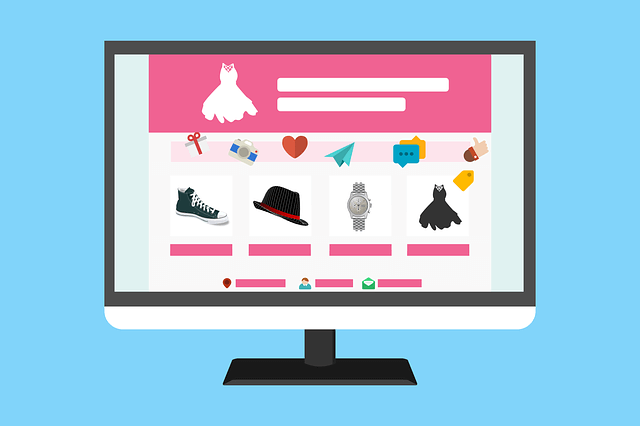
- Online stores and marketplaces are the backbone of e-commerce.
How it works
The technical implementation of any e-commerce project is simpler than, for example, a set of necessary components of the usual offline store. You can work in this sphere by preparing a basic foundation in the form of an online store. You will also need:
- A database for each product;
- The accounting system of stock balances;
- CRM solutions;
- schemes of goods delivery, etc.
Although this model should be considered highly simplified, because in each of the categories there are a lot of individual, specific nuances, yet, the main component of all the above in any case will be represented by a well-functioning and well-designed server (it is responsible for the loading speed of the site, and directly affects the interest of buyers). Also critically important is the database and the scheme of delivery of goods, services to users.
The e-commerce services work according to the following scheme (using the example of an online store):
- Placing ads in social networks, search engines to find potential customers, attracting them to the site.
- Converting the user into a customer of the company – the stage begins as soon as the person visits the site. The design of the platform, its structure, content, conversion buttons, and the activities of consultants work to move the user to the sales funnel.
- Applying to the financial system, the task of which is to check whether there are enough funds to make the payment. If the transaction is successful, the manager confirms the fact of payment, and this information is transmitted to the server.
- The system generates a message for the buyer about successful payment and acceptance of the order for processing.
- Next, the warehouse picking of the order and shipment to the address specified by the customer. As soon as the goods are shipped, the buyer is notified of this fact by SMS or messengers.
The algorithm is similar regardless of whether the user receives a product or service.
Diversity of e-commerce
The division of e-commerce into types is done by taking into account the interacting parties: the business, the consumer and the administration. On this basis, there are several basic models of e-commerce.
B2B(Business to Business)
A type of e-commerce for business in which the provision of a company’s goods or services is not addressed to the average user, but to other companies. This includes production, release:
- CRM systems;
- Programs for accounting;
- spare parts for cars;
- outsourcing and other solutions.
This also includes content creation, website development, maintaining social media accounts, and other services that are often outsourced. Searching for partners, establishing contacts, negotiation processes are carried out through specialized Internet sites and interactive databases. An example of B2B-commerce is a furniture factory ordering materials from a woodworking company materials for the production of the frame of upholstered furniture.
B2C(Business-to-customer)
It is a type of e-commerce for consumers, i.e. based on transfer of goods and services directly to consumers. This segment of e-commerce accounts for a high percentage of sales, which is not surprising, because today almost all of us, regardless of age and financial situation, buy goods and services online. For example, as part of B2C is the sale of all sorts of online courses, clothing, etc. In other words, the Business-to-customer refers to retail sales based on online stores, services, banks, etc. In this case, customers get access to a large assortment of products, convenient ordering and delivery of goods. On the other hand, an entrepreneur working on B2C reduces the cost of maintaining the business (for example, no need to pay for retail space).
C2C(Customer-to-customer)
It is a type of e-commerce that involves one customer interacting with another customer. That is, individuals sell and buy goods, provide and order services on special Internet sites. This type of e-commerce is quite popular due to the relatively low cost of products, and, at the same time, is particularly attractive to fraudsters. As for an example of C2C can be given an online site OLX (Ukraine), where users put up ads for the sale of almost any product and find buyers. The manufacturer has nothing to do with this trade.
C2B(Customer-to-business)
The consumer (an individual) gives something to a business (a legal entity). That is, Customer-to-business is the opposite of B2C. For example, a farmer delivers his produce to a restaurant or a freelancer offers his services at an online exchange.
The peculiarity is the user’s ability to set the price for his goods and services and to decide whether or not to sell. In this system, the site or any other online marketplace is used as an intermediary whose task is to find sellers for the price formed.
What is B2A
This model is a business administration that deals with online transactions between companies and government administration. B2A is the basis of fiscal, social security, dealing with all kinds of legal documentation, etc. An example of such e-commerce is public procurement through the Internet.
Characteristics of the C2A model
Commerce between consumers and administration, which gradually increases in popularity. The functioning of this model consists in creation of transactions between private consumers and state administration bodies. For example, you need to make an appointment with a doctor in a state clinic. To do this, you enter your data on a special website, choose the right doctor, and then the server processes your data and creates an appointment with the date and time.
About the main advantages of e-commerce
An obvious advantage that appeals to aspiring entrepreneurs is the low entry threshold. To open a business, as a rule, you do not have to save large sums of money, and all because you do not need to rent retail, warehouse space or hire a whole staff of employees. If you are interested in e-commerce, you can understand what it is with its other advantages:
- Wide target audience – if you set up your advertising correctly, you will quickly find customers who are interested in your product or service.
- Detailed analytics – information about your audience is provided by all kinds of services.
- Convenience for clients – round-the-clock access, a large selection of goods, the possibility of placing an order directly from home, and the lack of direct contact with people are pushing more and more users to make purchases over the Internet.
- There are a lot of prospects for further development – the gradual introduction of electronic payment systems, mailing lists, CRM, SaaS creates great potential for business promotion.
Disadvantages of e-commerce activities
In order to understand exactly what e-commerce on the Internet is, it is worth knowing about the disadvantages of this sphere:
- It is not always possible to provide 100% security of personal data. It’s not uncommon for fraudsters to gain access to user information for further fraudulent use.
- The inability to inspect the goods before purchase is one of the obvious and painful disadvantages of e-commerce. When the product gets to the customer, it may turn out, for example, that the clothes are sewn with defects, or the dishes are of poor quality. That is why it is important for successful online commerce to arrange for the simplest possible return procedure.
- A large number of competitors – almost every niche of this business is characterized by a huge number of similar online stores, so entrepreneurs have to literally fight for every customer. To do this, it is important not to save on marketing and promotion on the Internet.
- It is difficult to build a loyal audience – many customers are characterized by a fear of being cheated, so they do not trust new stores or companies. The problem almost disappears when the brand is often heard of, and there are positive reviews of its products.
- The profitability of the business depends on the quality of delivery – if the goods are regularly delivered with delays, with broken integrity of the package, customers are disappointed in the brand and leave it.
It is also worth mentioning the difficulties that are typical for those wishing to open an international e-commerce company:
- Dynamically evolving legislation in matters of e-commerce regulation.
- The need for complex certification, authorization and other cybersecurity methods, otherwise you simply cannot open your business.
- Strict enforcement of intellectual property rights – if copyright is violated, the business will face huge problems.
These and other nuances are known to the lawyers of Lawrange, so they will be able to help you properly open a company on the Internet, as well as provide support for the ready-made business if necessary. We have first-hand knowledge of e-commerce, which laws regulate this sphere on the territory of Ukraine and other jurisdictions, have a deep knowledge of the economy, and the fintech industry, so we can ensure a successful start-up of your business.
Choosing a Jurisdiction to Open an E-commerce Company
If you have decided to launch an e-commerce business, you probably wondered where to register your future company. It depends on how exactly you will pass the immediate registration process, which will apply the tax law and in what general conditions will develop your e-commerce project.
Order a consultation
The Asian direction of commerce: Hong Kong
This jurisdiction is the leader in the number of those wishing to register an e-commerce company. It is characterized by a favorable tax regime and state support for local and online businesses. If you are interested in registering a company in Hong Kong, you may prefer it:
- Dropshipping – you need to manage the supply chain, acting as an intermediary who trades goods at retail without intermediate storage in its own warehouse.
- Wholesale – sending goods in large quantities and distributing to small stores at a discounted price.
- Subscription to certain services for a certain period of time.
- White Label – retailer’s use of their own brand and resale of non-proprietary goods purchased from a supplier.
To register a company you need to:
- decide on its structure (individual entrepreneurship, partnerships and limited liability companies are popular);
- to give a name to the store;
- decide whether the business needs a license (depends on the type of activity of the enterprise);
- register a local mailing address;
- appoint a corporate secretary;
- obtain a business registration certificate;
- open a business account at a local bank (personal presence required);
- choose an e-commerce platform (this jurisdiction creates optimal conditions for trading on the sites of Alibaba, AliExpres, Oberlo);
- set up a store.
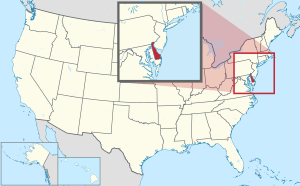
Features of starting an e-commerce company in Delaware
This jurisdiction is considered one of the most attractive in terms of taxation, stable financial situation and rich corporate traditions. Registering a company in the state of Delaware is done by:
- Reserving a name.
- Filing an application for incorporation (this requires preparation of articles of incorporation, company memorandum and other documents).
- Obtaining a certificate of incorporation after the regulator reviews your application.
The main requirements for incorporating an e-commerce company in Delaware include having a registered local address, as well as a minimum of one director, one shareholder in the company.
Is it worth opening an e-commerce company in England?
You can safely choose this jurisdiction, which is known for its well-developed economy, as well as its liberal mentality. England attracts foreign investment with a pleasant tax climate (corporate tax of 19%) and the possibility of opening a corporate account in local payment systems. Company registration in England takes about 1-2 weeks, and is standard in several stages:
- Firstly, a name is reserved.
- Then an application for registration is submitted.
- The regulator reviews the application and attached documents.
- After that, you receive a certificate of incorporation.
At the same time you can use the possibility of remote registration of e-commerce company through the postal service.
UAE – the ideal place to develop the economy of the Middle East
The United Arab Emirates offers the best conditions for the development of any e-commerce projects. The English common law system, no corporate tax, and the best attitude to foreign investors. Registration of a company in the UAE follows the same standard scheme as in other jurisdictions. The exception is the impossibility to carry out this process remotely. It is worth noting the very strict attitude to licensing – after registration you can only engage in business activities that are provided by the license issued. Otherwise, there is a heavy fine.
Paying attention to Cyprus
This jurisdiction offers entrepreneurs access to the European market. Registration of a company in Cyprus (including the banking and payment system) is done remotely. There is a favorable tax regime – the rate of 12.5%. A mandatory condition for registering an e-commerce company is the presence of a resident secretary. It is also preferable to appoint a director.
What makes Portugal attractive for e-commerce
In this country, the corporate tax rate is 21%, while you will have access to tax benefits if certain conditions are met. Company registration in Portugal is also done remotely, by:
- Reserving a name.
- Filing an application for company registration.
- Examination of your application by the Regulator.
- Obtaining a certificate of incorporation.
For more information on the peculiarities of registration in these and other jurisdictions please contact us by phone numbers indicated on the website, or fill in the form and we will call you back.
Why do you need to choose Lawrange?
Today e-commerce is one of the most effective ways to make money. What it is and what are its advantages, disadvantages, what requirements are necessary to register companies depending on the chosen jurisdiction – these and other questions are answered by the experts of Lawrange Lawyers’ Association. Our lawyers have extensive practical and theoretical experience, and therefore know how to translate your business ideas into reality. We provide support at all stages of registration of an e-commerce company, as well:
- We guarantee confidentiality and security of client data.
- Ensure high efficiency and timeliness – we care about working for the result.
- We work transparently – the prices of our services are fixed, with no risk of increasing in the future.
FAQ
How long does it take to establish an eCommerce company?
The answer to this question depends on the choice of jurisdiction. On average it takes 2-4 weeks to register.
What is the best country to choose for opening an e-commerce business?
It is recommended to give preference to countries with favorable tax policies and the possibility of opening a local account.
How to receive payments from e-commerce business?
It is necessary to open a processing account (merchant), through which any international payments are accepted with their subsequent accumulation in a single account.
ORDER REGISTRATION OF THE E-COMMERCE COMPANY
 Telegram bot for quick communication with us